
Why choose wedding cocktail music: 2026 guide
Discover why choose wedding cocktail music for a vibrant drinks reception. Create warmth and conversation at your celebration!
TL;DR:
- Wedding cocktail music fosters guests’ mingling and sets a warm social tone during the drinks reception. Choosing the right style, volume, and a professional entertainer ensures a relaxed atmosphere that energizes and connects guests. Investing in high-quality music or live performances at this stage creates lasting positive guest experiences that carry into the celebration.
Wedding cocktail music is defined as the curated soundtrack played during the drinks reception that bridges your ceremony and evening celebration. Knowing why choose wedding cocktail music matters is the difference between guests standing awkwardly with champagne flutes and a room that genuinely hums with warmth and conversation. The cocktail hour, known in the industry as the drinks reception, is the social pivot of your entire wedding day. Get the music right here and everything that follows feels effortless.
Why does wedding cocktail music matter so much?
The drinks reception is not a pause in your wedding. It is the moment your guests shift from formal observers to active participants in your celebration. Cocktail hour music acts as a social catalyst, encouraging mingling and breaking the ice in a way that passive silence simply cannot. Without it, guests cluster in familiar groups, conversations stall, and the energy you worked so hard to build during the ceremony quietly drains away.
The benefits of cocktail music go well beyond filling silence. Music at a comfortable volume gives guests a shared sensory experience to react to, which makes starting conversations feel natural rather than forced. Think of it as the social permission slip your guests need to relax, move around, and connect with people they may not have seen in years.
“Cocktail hour music is not mere filler; it is the heartbeat that breaks ceremony’s formality and energises guests for the celebration ahead.”
The impact of cocktail music on guest experience is measurable in the room. Couples who invest in quality drinks reception music consistently report that their guests arrive at the wedding breakfast already animated, relaxed, and ready to celebrate. That energy carries directly into the speeches, the first dance, and the evening reception.
How music shapes the emotional arc of your day
Your ceremony carries significant emotional weight. Vows, readings, and the first kiss all create a heightened, formal atmosphere. The drinks reception needs to gently release that tension and replace it with joy and anticipation. The right wedding background music does this without anyone consciously noticing. Guests simply feel good, and they credit the whole day for it.
The importance of live wedding music or a well-curated playlist at this stage is that it manages the emotional temperature of the room. Too quiet and the space feels tense. Too loud and conversation becomes a chore. The sweet spot is music that fills the room without demanding attention.
What are the best music styles for a drinks reception?
The best background music for weddings during the cocktail hour sits in a specific zone: familiar enough to feel welcoming, sophisticated enough to feel special. The most effective genres for this moment include jazz, acoustic pop, lo-fi instrumental, classical crossover, and cinematic piano. Each of these works because it carries melody and warmth without the driving beat that pulls attention away from conversation.
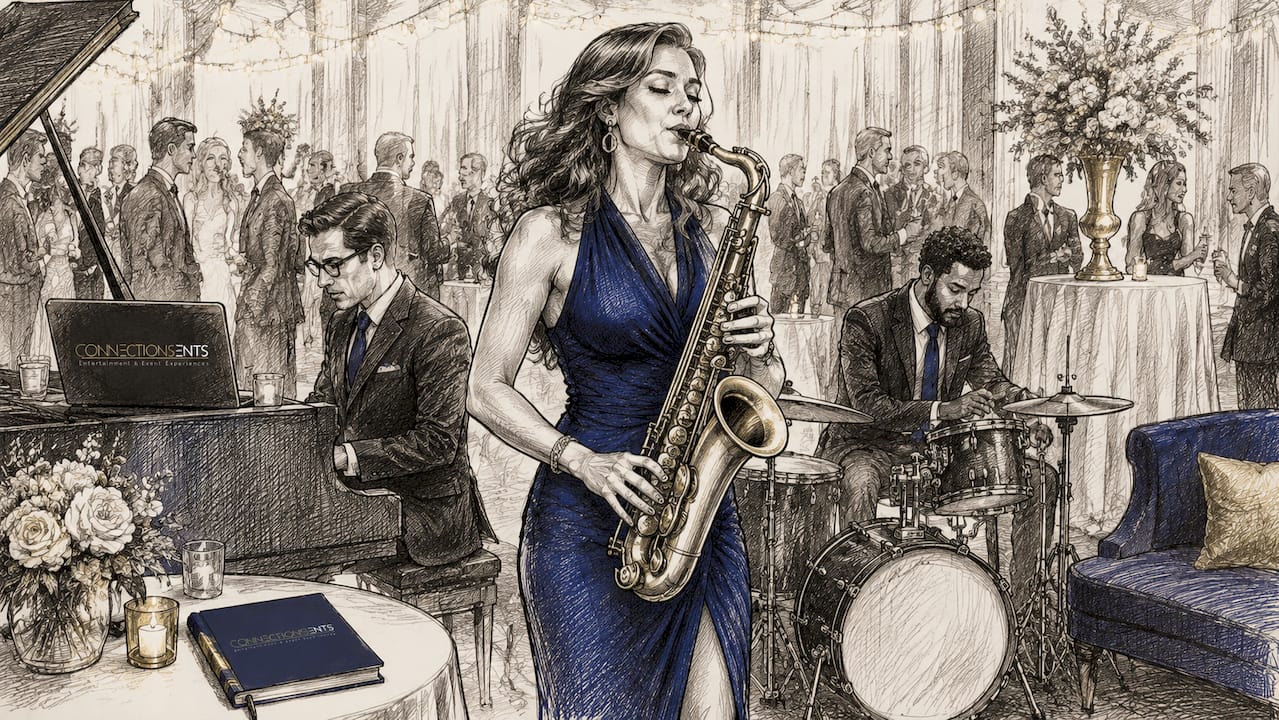
Curated cover versions in jazz or lo-fi styles create a sophisticated vibe that remains welcoming and familiar. A jazzy piano version of a well-known pop song, for example, gives guests the pleasure of recognition without the distraction of lyrics they want to sing along to. This balance is harder to achieve than it sounds, and it is one reason professional curation matters.
Pro Tip: Build your drinks reception playlist in three tiers: soft and relaxed for arrivals, slightly more upbeat for the middle section, and warm and full for the final 20 minutes before guests are called through. This mirrors the natural social energy of the room.
Comparing music styles for cocktail hour
| Style | Best For | Energy Level | Live or Recorded |
|---|---|---|---|
| Jazz quartet | Elegant, formal weddings | Low to medium | Live works brilliantly |
| Acoustic pop covers | Relaxed, modern weddings | Medium | Both work well |
| Lo-fi instrumental | Laid-back, creative weddings | Low | Recorded playlist |
| Classical crossover | Traditional or outdoor weddings | Low to medium | Live or recorded |
| Cinematic piano | Romantic, intimate weddings | Low | Recorded playlist |
Genre choice should also reflect your guest demographics. A room with a wide age range responds well to familiar song choices played in an unexpected style, such as acoustic or jazz arrangements of recognisable hits. This approach satisfies guests across generations without leaning too heavily into any single era.
Cocktail hour music should be upbeat yet not high-energy, with volume set at a level that allows comfortable conversation. This is not a rule of thumb. It is the single most important technical decision in your drinks reception music plan.
DJ, live band, or playlist: which option is right for you?
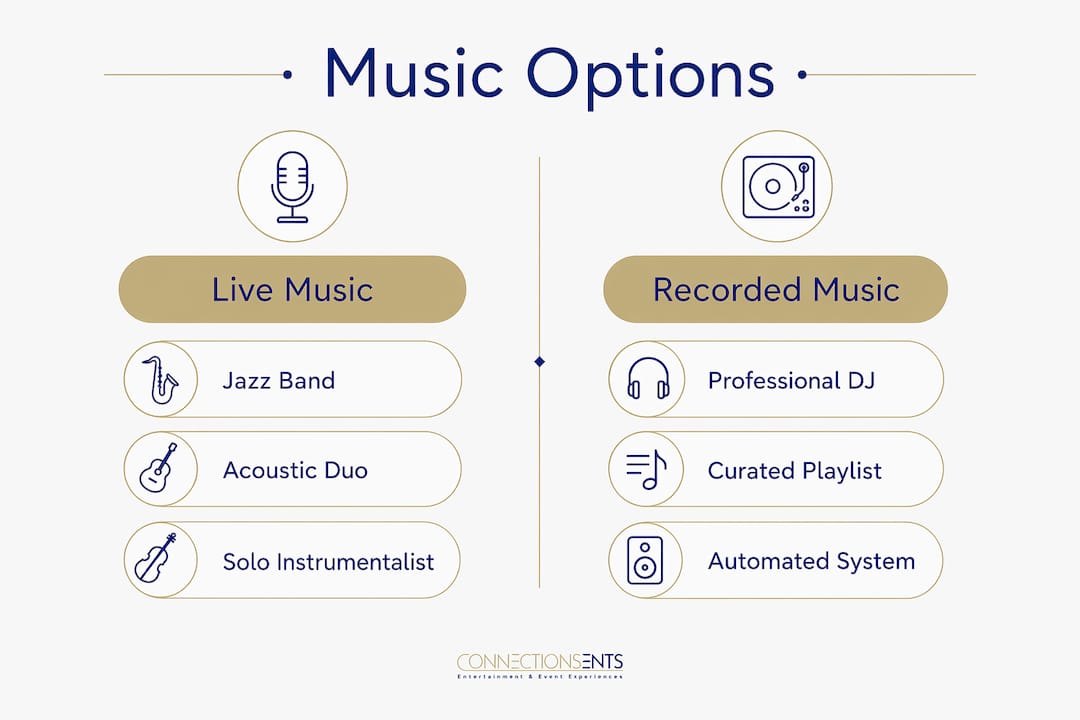
The three main wedding music options for a cocktail hour each carry distinct advantages, costs, and levels of control. Understanding the differences helps you match the right format to your budget, venue, and vision.
Breaking down your entertainment choices
Curated playlist: The lowest-cost option and the most controllable. You select every track, set the order, and know exactly what will play. The limitation is that a playlist cannot read the room. If guests arrive earlier than expected or the energy shifts, a static playlist cannot adapt.
Professional DJ: The mid-range investment and the most flexible option. A skilled DJ reads the room in real time, adjusts tempo and volume, and manages transitions between your ceremony, drinks reception, and evening reception. A single DJ managing all music phases keeps the wedding’s momentum and avoids disjointed transitions. This is a significant practical advantage that couples often underestimate until they experience a poorly managed handover.
Live musicians: The highest investment and the highest impact. Live acoustic music during cocktail hour effectively breaks lingering formality and encourages guest bonding in a way recorded music rarely matches. A live jazz duo or acoustic guitarist becomes a visual and auditory focal point that gives guests something to gather around and talk about.
Entertainment costs follow a tiered model: playlists are the lowest cost, DJs sit in the mid-range, and live bands represent the highest investment. That cost difference reflects not just talent but also equipment, preparation time, and the ability to respond dynamically to your event.
- Playlist: Full control, lowest cost, no adaptability
- DJ: Adaptable, professional sound management, mid-range cost
- Live musicians: Highest guest impact, visual presence, premium investment
Pro Tip: If your budget allows only one live music element, place it at the drinks reception rather than the evening reception. The cocktail hour is where live performance has the greatest social impact per pound spent.
Professional sound management is critical at every stage. Well-balanced sound keeps music enveloping without overpowering guests. Poor sound at the cocktail hour, whether too boomy or too thin, creates discomfort that guests cannot always identify but absolutely feel. This is why DIY Bluetooth speaker setups, however convenient, rarely deliver the same result as professional audio equipment.
To understand more about the energy and visual impact that live performers bring to weddings, the Connections Entertainment guide on wedding live performers covers the full range of options in detail.
How do you plan cocktail hour music for a smooth wedding day?
Planning your drinks reception music is a practical process with clear steps. Follow these in order and you will avoid the most common pitfalls couples encounter.
Set your duration and song count. A cocktail hour typically lasts 60–90 minutes and requires 20–30 songs for an appropriate atmosphere. Build your playlist or brief your entertainer with this range in mind. Running short creates dead air. Running long means repeating tracks, which guests notice.
Define your must-play and do-not-play lists. Give your DJ or live performers a written list of both. Must-plays set the tone you want. Do-not-plays prevent jarring moments that pull guests out of the mood. Be specific: naming an artist is less useful than naming a track.
Plan the energy progression. Cocktail hour music follows a natural progression from relaxed arrival to lively ending. Brief your entertainer on this arc so they build energy deliberately rather than playing tracks at random. The room should feel noticeably more alive at the end of the drinks reception than at the start.
Coordinate with your venue. Confirm speaker placement, power access, and any noise restrictions before the day. Some venues have strict volume limits for outdoor or early-evening spaces. Knowing this in advance lets your entertainer plan accordingly rather than troubleshoot on the day.
Book a single entertainment lead for all phases. Hiring one professional for ceremony, cocktail, and reception ensures seamless transitions and consistent sound quality. Multiple separate providers create handover gaps, mismatched volumes, and the risk of one supplier running late and disrupting the next phase.
Brief your entertainer on the timeline. Share your full wedding day schedule, including when guests are expected to arrive at the drinks reception and when they will be called through to the wedding breakfast. Your entertainer needs this to manage pacing and avoid an abrupt or premature energy reset.
For a detailed look at how professional entertainment manages the transition from cocktail hour into the evening reception, the Connections Entertainment evening entertainment transition guide is worth reading alongside this one.
Key takeaways
The most effective approach to wedding cocktail music is to treat the drinks reception as a deliberate social experience, not an interval, by choosing the right format, style, and professional to manage it.
| Point | Details |
|---|---|
| Cocktail music is a social tool | The right music breaks post-ceremony formality and encourages genuine guest interaction. |
| Volume and tempo are non-negotiable | Music must allow comfortable conversation; mid-tempo energy works best for this phase. |
| Live music delivers the highest impact | A live acoustic performer creates a visual and social focal point that recorded music cannot replicate. |
| Plan 20–30 songs for 60–90 minutes | Matching song count to duration prevents dead air and avoids awkward repetition. |
| One entertainment lead covers all phases | A single professional managing ceremony, cocktail, and reception keeps transitions smooth and energy consistent. |
The part of the wedding most couples underestimate
I have worked with hundreds of couples across Norfolk and East Anglia, and the drinks reception is consistently the segment they plan last and regret most when it goes wrong. The ceremony gets months of attention. The evening reception gets the DJ booking and the first dance rehearsal. The cocktail hour gets a Spotify playlist thrown together the week before.
What I have seen repeatedly is that the cocktail hour sets the social temperature for everything that follows. When it works well, guests arrive at the wedding breakfast already laughing, already connected, already in the mood to celebrate. When it falls flat, you spend the first hour of your reception trying to warm up a room that never quite got going.
The most common mistake is choosing music that is too passive. A quiet ambient playlist feels safe, but too-passive music causes awkwardness rather than preventing it. Controlled, active music, whether live or professionally curated, does the social work you cannot do yourself while you are having photographs taken.
My honest recommendation is to treat the drinks reception music budget as seriously as the evening entertainment budget. If you can only afford live music for one part of the day, put it here. The return on that investment, measured in guest energy and the atmosphere it creates, is higher at this stage than at any other point in the day.
If you are considering entertainment options for guests of different ages, the Connections Entertainment guide on entertainment for older guests offers practical ideas for making the drinks reception work across generations.
— Darren
Plan your drinks reception music with connections entertainment
Connections Entertainment works with couples across Norfolk and East Anglia to plan drinks reception music that fits the tone, timeline, and guest profile of their wedding day. Whether you are looking for a professional DJ to manage all music phases, a live acoustic performer for the cocktail hour, or a fully curated playlist with professional sound management, the team at Connections Entertainment can help you find the right fit. Browse the full range of available entertainers to see live performers, DJs, and specialist acts suited to weddings of every style and scale. For a broader overview of what professional event entertainment looks like in practice, the Connections Entertainment website is a practical starting point for your planning.
FAQ
What is wedding cocktail music?
Wedding cocktail music, also called drinks reception music, is the curated soundtrack played during the period between the ceremony and the wedding breakfast. Its purpose is to relax guests, encourage mingling, and set the social tone for the evening ahead.
How long should a cocktail hour playlist be?
A drinks reception typically lasts 60–90 minutes and requires 20–30 songs to maintain the right atmosphere throughout. Building a playlist slightly longer than the expected duration prevents awkward silences if the reception runs over.
Is live music worth it for the cocktail hour?
Live acoustic music during the drinks reception is widely regarded as the highest-impact entertainment choice for this phase of the day. It creates a visual focal point, breaks post-ceremony formality, and encourages guest interaction more effectively than a recorded playlist.
Should the same DJ cover the ceremony, cocktail hour, and reception?
Hiring a single entertainment professional for all three phases is the most reliable approach. One DJ managing all music phases keeps transitions smooth, maintains consistent sound quality, and avoids the timing gaps that occur when multiple suppliers hand over between segments.
What volume should cocktail hour music be played at?
Cocktail hour music should be set at a volume that fills the room without requiring guests to raise their voices. The standard guidance is mid-tempo energy at conversational volume, loud enough to feel present but never so loud that it competes with speech.