
Why choose live music for celebrations
Discover why choose live music for celebrations. Enhance your event with unforgettable moments and emotional connections that guests will remember.
TL;DR:
- Live music creates stronger emotional and physiological responses than prerecorded sounds at celebrations. It encourages audience participation, builds social bonds, and enhances event atmosphere with real-time adaptability. Booking early ensures the best acts and successful integration into the event’s structure.
Live music is defined as a performance delivered by musicians in real time, in the same physical space as the audience. It is the single most effective way to create an emotionally charged atmosphere at any celebration. Whether you are planning a wedding in Norfolk, a corporate awards dinner, or a milestone birthday, the choice of entertainment shapes how guests feel and what they remember. This article explains why choosing live music for celebrations consistently outperforms other entertainment formats, what the research says about its physiological impact, and how to book it correctly.
Why choose live music for celebrations: the core case
Live music does something recorded audio cannot. It creates a shared, unrepeatable moment between performers and guests. A 2026 pilot study with 130 participants found that live music significantly increases heart rate and emotional arousal compared to livestreams. That finding matters because elevated emotional arousal is directly linked to stronger memory formation and greater guest satisfaction.
The concept behind this is sometimes called “liveness” in music psychology. It refers to the effect of physical performer presence, real-time sound production, and visible effort on an audience. When guests watch a musician play, they do not just hear the music. They read facial expressions, feel the energy of the room shift, and respond collectively. That collective response is what turns a good party into a genuinely memorable event.
Live music outperforms recorded audio in measurable audience engagement, movement synchrony, and emotional response. These are not soft, subjective claims. They are measurable outcomes that event planners can use to justify the investment. The importance of live performances at celebrations is not a matter of taste. It is a matter of what the evidence shows works.
“Live music creates a physiological response in audiences that recorded music simply cannot replicate. The presence of a performer, the unpredictability of a live set, and the shared energy of a room all combine to produce an experience that guests carry with them long after the event ends.”
How does live music create emotional connections at events?
The psychological mechanism behind live music’s power is called embodied music cognition. This is the process by which listeners physically respond to music through movement, breathing, and heart rate changes. When a live band plays, the audience does not process the music passively. They synchronise with it. That synchronisation creates a sense of shared experience that recorded playlists cannot produce.
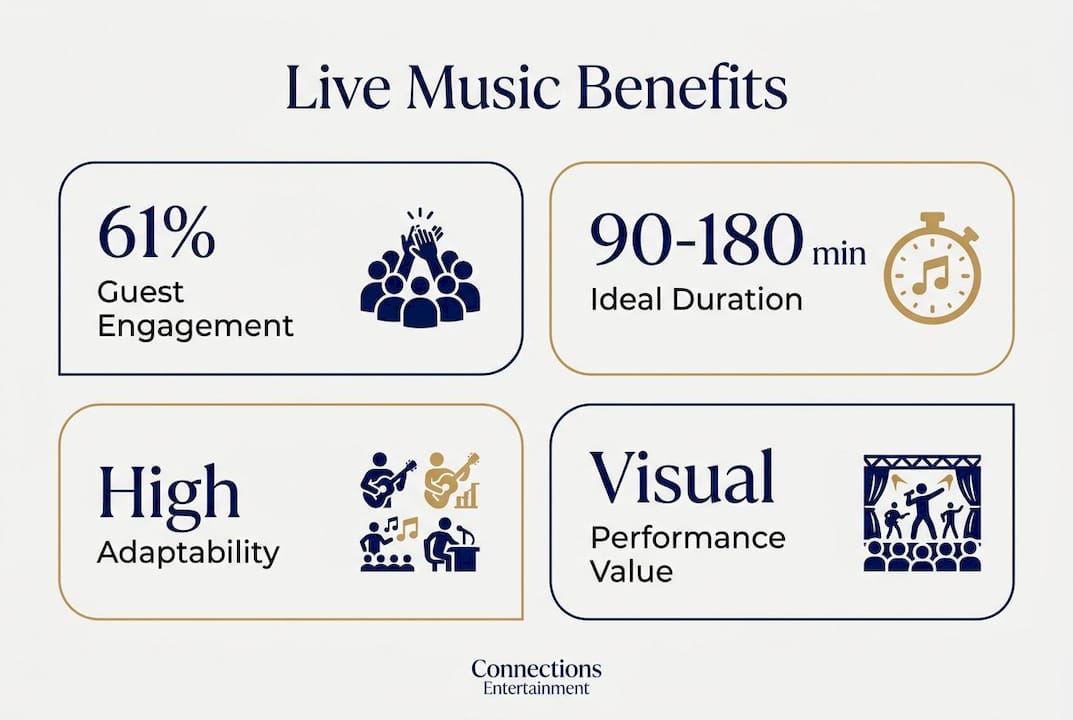
Guest engagement at live performances is qualitatively different from engagement at DJ sets or background playlist events. Guests make eye contact with performers, respond to musical cues, and participate collectively in moments like a key change or a well-known chorus. This participation builds social bonds between guests, which is particularly valuable at weddings and corporate events where relationship building is part of the purpose.
The shift towards audience-driven setlists is making this effect even stronger. Events with interactive setlists see 61% dance floor impact versus 23% at events without real-time requests. That is not a marginal difference. It means that a band willing to take requests and read the room can more than double the number of guests actively participating on the dance floor.
The benefits of live music extend beyond the dance floor. Acoustic sets during a drinks reception, for example, create a warm and welcoming atmosphere that helps guests relax and connect. A string quartet or a solo guitarist at a wedding reception signals quality and attention to detail in a way that a Spotify playlist simply does not. The role of entertainment in party planning is to set the emotional tone of the entire event, and live music does that more effectively than any other format.
What practical advantages do live bands offer over playlists or DJs?
Live bands offer a set of practical advantages that go beyond atmosphere. The most significant is adaptability. A skilled band reads the room in real time and adjusts tempo, volume, and song selection accordingly. If guests are seated and talking, the band can pull back to a quieter, more ambient sound. When the dance floor fills, they can build energy deliberately. A pre-programmed playlist or even a DJ working from a fixed set cannot respond with the same nuance.
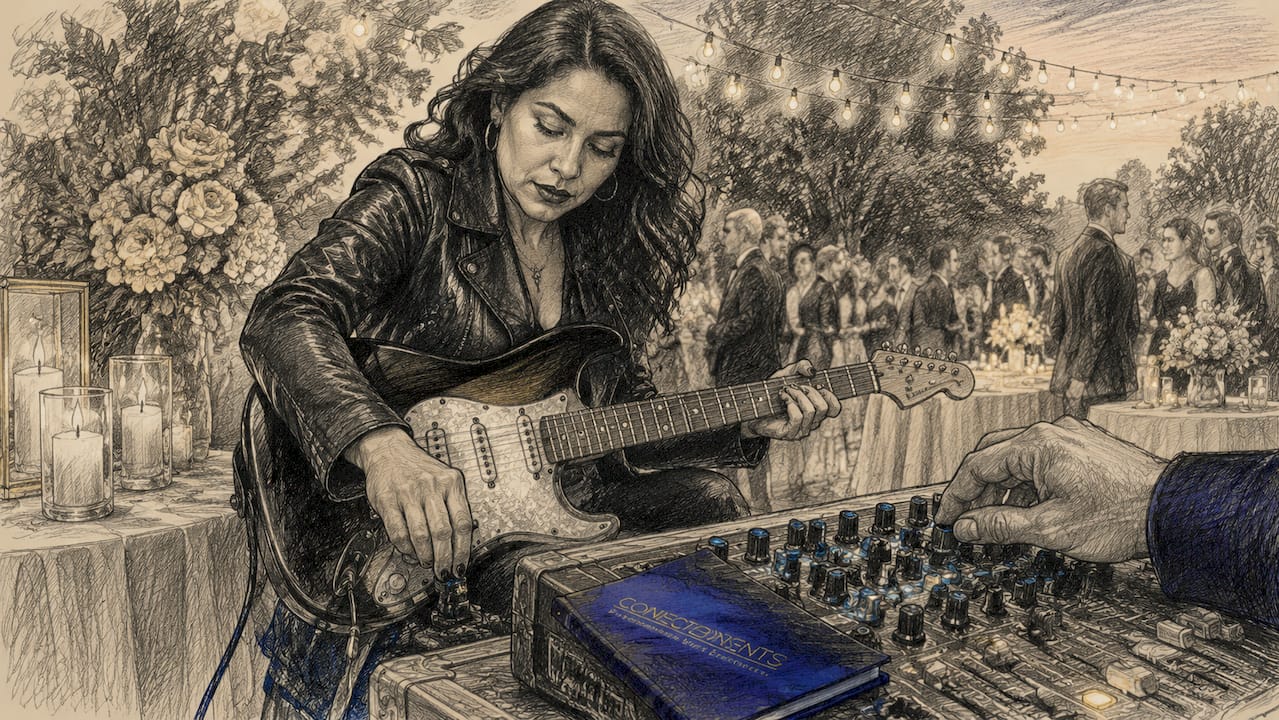
Professional live bands also bring a level of visual engagement that recorded music cannot match. Guests watch the performance, photograph it, and talk about it. The band becomes part of the event’s identity. This is particularly true at weddings with live performers, where the entertainment is often one of the most discussed elements in guest feedback.
Pro Tip: Match the size of the act to the size of the room and the guest list. A five-piece band in a room of 40 guests will overpower the space. A duo or trio suits intimate gatherings, while a four or five-piece band works best in rooms of 80 guests or more.
| Feature | Live band | DJ | Recorded playlist |
|---|---|---|---|
| Real-time adaptability | High | Medium | None |
| Visual engagement | High | Medium | None |
| Guest interaction | High | Medium | None |
| Volume control precision | Medium (professional bands: 85–95 dB limits) | High | High |
| Cost | Higher | Medium | Low |
| Atmosphere creation | Strongest | Strong | Moderate |
Corporate bands meet stricter professional standards than pub bands, including dress codes, volume limits, content restrictions, and timing precision. That professionalism is part of what you pay for, and it is what makes a corporate event feel polished rather than improvised. A band that arrives on time, dresses appropriately, and plays within agreed volume limits removes a significant source of event-day stress.
How to select and work with live musicians for your celebration
Booking live music for a celebration requires more planning than booking a DJ or setting up a playlist. The process rewards early action and clear communication. The most common mistakes planners make are booking too late, underspecifying the brief, and failing to confirm technical requirements in writing.
Start with these key considerations before you contact any act:
- Event type and formality. A black-tie corporate dinner requires a different act to a relaxed garden party. Clarify the dress code and expected atmosphere before you shortlist bands.
- Guest numbers and venue size. The act size should match the room. Confirm the venue’s AV capabilities and whether the band needs to bring their own PA system.
- Set length and timing. A live band is best suited to a defined performance window of 90 minutes to 3 hours where they are the main attraction. Confirm set times, break arrangements, and background music provision during intervals.
- Contract terms. Contracts must specify load-in windows, soundcheck times, volume restrictions, dress code, and content boundaries. Do not rely on verbal agreements.
- Budget. UK corporate and wedding band rates in 2026 range from £250–£400 for solo acts to £1,200–£2,500 for five-piece bands and above. These rates reflect a 30–50% premium over pub rates, justified by professional standards and reliability.
Pro Tip: Book your live act as early as possible, ideally six to twelve months ahead for weddings and three to six months ahead for corporate events. The best acts fill their calendars quickly, and early booking gives you time to communicate event specifics clearly, including any song requests, themed sets, or dress requirements.
When you brief the band, share the full event schedule, not just the performance slot. A good band will use that context to prepare a setlist that fits the energy arc of the evening. If dinner runs long, they need to know. If there is a speech immediately before their set, they need to plan their opening accordingly. Clear communication before the event prevents awkward transitions on the night.
The importance of a wedding band is often underestimated until planners see the difference it makes to guest experience. Couples who invest in live music consistently report it as one of the highlights of their day in post-event feedback.
In which celebration contexts does live music make the most difference?
Live music delivers the greatest value in celebrations with a clear, dedicated entertainment window and a guest group that is present to enjoy it together. Weddings are the strongest fit. The evening reception, in particular, benefits from a live band because guests are relaxed, the formalities are complete, and the focus shifts entirely to enjoyment. A wedding drinks reception is another strong context, where acoustic performers create atmosphere without competing with conversation.
Corporate awards dinners and milestone celebrations such as significant birthdays or anniversaries also suit live music well. These events have a defined programme, a captive audience, and a clear emotional purpose. Live music reinforces that purpose by marking the occasion as special.
| Event type | Live music fit | Better alternative |
|---|---|---|
| Wedding evening reception | Excellent | N/A |
| Wedding drinks reception | Excellent (acoustic acts) | N/A |
| Corporate awards dinner | Excellent | N/A |
| Milestone birthday (80+ guests) | Excellent | N/A |
| Cocktail networking event | Moderate | Acoustic duo or background playlist |
| Multi-day conference | Low | DJ-emcee combination |
| Small team celebration (under 30) | Moderate | Solo acoustic act or DJ |
| Outdoor festival-style event | Excellent | N/A |
Entertainment budget allocation has risen to 20–30% of total event spend, reflecting how central entertainment has become to event success. That shift signals that planners and clients alike recognise the return on investment that quality live entertainment delivers.
Live music is less suitable when the event schedule is fragmented, when guests are moving between multiple spaces, or when background sound is needed across a long period without a focal performance moment. In those contexts, a DJ or a curated playlist serves the event better. The decision is not about prestige. It is about matching the entertainment format to the event structure.
Key takeaways
Live music is the most effective entertainment format for celebrations with a defined performance window, because it produces measurable physiological and emotional responses that recorded audio cannot replicate.
| Point | Details |
|---|---|
| Physiological impact | Live music raises heart rate and emotional arousal, producing stronger memories than recorded audio. |
| Interactive setlists | Events with real-time song requests see dance floor participation rise from 23% to 61%. |
| Professional standards | Corporate and wedding bands operate within volume limits, dress codes, and precise timing requirements. |
| Budget planning | UK band rates range from £250 for solo acts to £2,500 for five-piece bands, with early booking recommended. |
| Event fit | Live bands work best in dedicated 90-minute to 3-hour performance windows at weddings, awards dinners, and milestone events. |
What I have learned from years of watching live music transform events
After working with live entertainers and event planners across countless celebrations, the thing that strikes me most is how consistently people underestimate what live music actually does to a room. Planners often treat it as a nice addition. The events that stand out in my memory are the ones where the entertainment was treated as a core part of the experience, not an afterthought.
The most common mistake I see is booking the wrong format for the event structure. A five-piece band booked for a networking event with no clear performance window is wasted. Guests are moving around, conversations are fragmented, and the band ends up playing to a half-empty room. The same band at a wedding evening reception is transformative. The lesson is simple: match the format to the structure, not to the budget or the prestige.
I also think planners overlook the value of briefing the act properly. The best bands I have seen work are the ones who knew the event inside out before they arrived. They knew the couple’s first dance song, the corporate theme, the age range of the guests. That knowledge shows in the performance. It is the difference between a band that plays well and a band that plays perfectly for that specific room on that specific night.
Live music’s role is also evolving. Audience-driven setlists and real-time request technology are changing what guests expect from a live act. The bands that embrace that interactivity are the ones delivering the strongest results. If you are booking live music for a celebration in 2026, ask the act how they handle requests and how they read a room. The answer will tell you a great deal about whether they are the right fit.
— Darren
Planning live music for your event with Connections Entertainment
Connections Entertainment works with a curated portfolio of professional live musicians and bands across Norfolk and East Anglia, covering weddings, corporate functions, private parties, and festive events. Every act on the roster meets professional standards for timing, volume control, and presentation, so you are not taking a risk on the night. The team provides bespoke booking support, helping you match the right act to your event type, guest numbers, and budget. Browse the full catalogue of professional entertainers to find live musicians suited to your celebration, or read more about event entertainment value to understand how live music fits into your overall event plan. Get in touch to start building your entertainment brief with expert guidance.
FAQ
Why does live music cost more than a DJ?
Live bands command higher fees because they meet professional standards including dress codes, volume control, content restrictions, and timing precision. UK corporate and wedding band rates in 2026 range from £250 for solo acts to £2,500 for five-piece bands.
How long should a live band perform at a wedding?
A live band performs best in a dedicated window of 90 minutes to 3 hours where they are the main attraction. Shorter or fragmented schedules reduce their impact and often suit a DJ-emcee combination better.
What should a live music contract include?
A contract must specify load-in times, soundcheck windows, volume limits, dress code, content restrictions, and break arrangements. Clear written terms prevent misunderstandings and protect both the client and the act.
Is live music suitable for corporate events?
Live music suits corporate events with a defined post-programme entertainment window, such as awards dinners or gala evenings. Fragmented schedules or networking-heavy formats are better served by a DJ or acoustic background act.
How early should I book a live band for my celebration?
Book six to twelve months ahead for weddings and three to six months ahead for corporate events. The best professional acts fill their calendars quickly, and early booking gives you time to communicate your event specifics clearly.