
What is wedding dance floor lighting?
Discover what wedding dance floor lighting is and how it energizes celebrations. Transform your reception into an unforgettable party experience!
TL;DR:
- Wedding dance floor lighting energizes the dance area with dynamic, programmable effects that signal guests to dance. It plays a vital role in setting the mood, influencing guest behavior, and enhancing photographs, making it an essential production element. Proper layering, professional coordination, and DMX-controlled fixtures ensure a seamless, impactful atmosphere that transforms the reception experience.
Wedding dance floor lighting is defined as a system of dynamic, programmable lights positioned to illuminate the dance area and signal the shift from formal dinner to lively celebration. It is distinct from general venue lighting. Where ambient lighting sets a soft, romantic tone across the whole room, dance floor lighting targets the party zone with colour, movement, and energy. Professional event planners class it as a production element, not a decoration. Get it right, and your guests will fill the floor within minutes of the first track dropping.
What is wedding dance floor lighting and why does it matter?
Dance floor lighting is the collective term for any lighting rig designed specifically to energise the dance area at a wedding reception. The industry term used by AV professionals and event production companies is “production lighting,” which covers everything from moving heads and wash lights to LED uplighting and light-up dance floors.
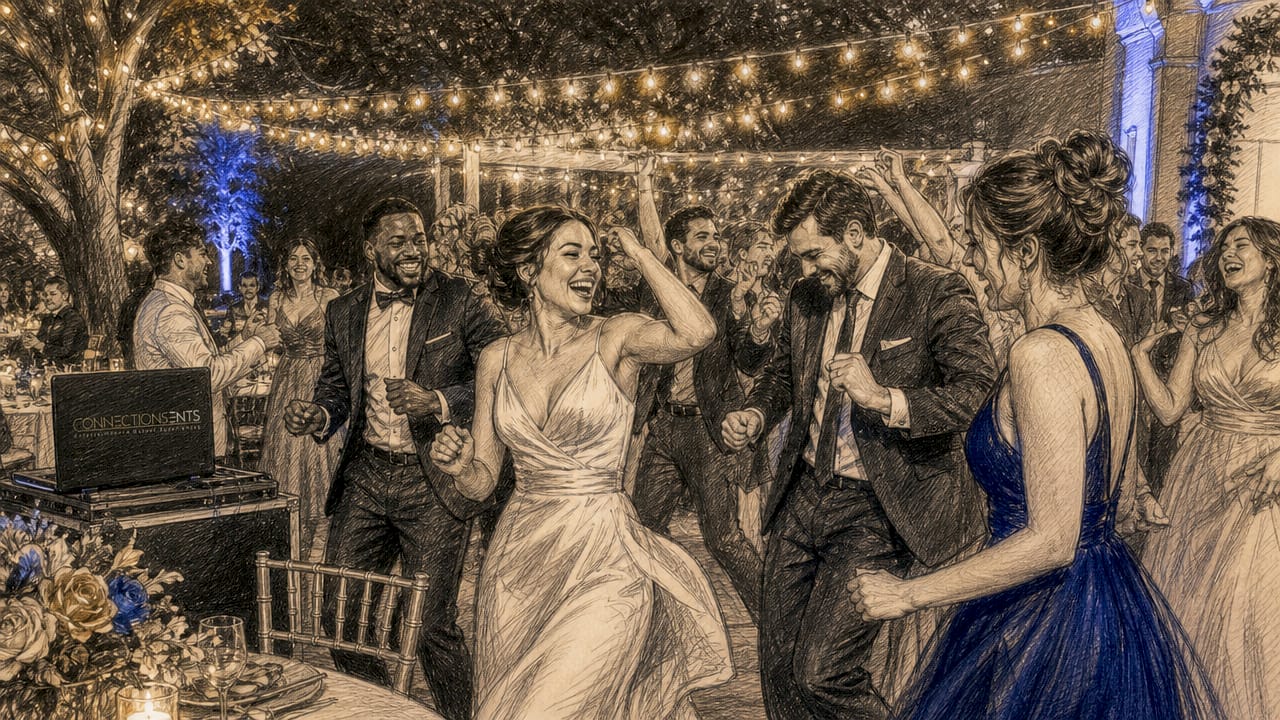
Dance floor lighting acts as a non-verbal signal for guests to start dancing. When the house lights dim and the dance floor effects activate, guests read that as a clear cue: the party has begun. Without that visual shift, even the best DJ can struggle to pull people away from their seats.
The importance of this cannot be overstated. An Irish wedding industry survey found that 88% of couples prioritise mood lighting over traditional table decor. That figure reflects a broader shift in how couples think about their reception. The atmosphere you create matters more to guests than centrepieces or chair covers.
Connections Entertainment treats dance floor lighting as a core part of its wedding entertainment packages, not an optional add-on. When lighting and music come from the same provider, the results are far more cohesive and professional.
What types of wedding dance floor lighting are commonly used?
The range of dance floor lighting options available in 2026 is wider than most couples realise. Broadly, the options fall into two categories: static ambient fixtures and active production lights.
Static ambient fixtures create a consistent, warm backdrop. Common examples include:
- String lights and festoon bulbs draped above the dance area for a soft, romantic glow
- LED uplighting placed around the room perimeter to wash walls in colour
- Fairy light curtains used as backdrops behind the DJ booth or top table
Active production lights move, change colour, and react to music. These are the fixtures that create the “wow” factor on the dance floor:
- Moving head lights pan, tilt, and change colour in real time, creating sweeping beams across the floor and ceiling
- LED wash lights flood the dance area in rich, programmable colour
- Gobo projectors cast patterns, monograms, or text onto walls and floors
- LED tubes and pixel bars create vivid colour effects with precise control
A third category worth knowing is the light-up dance floor, a modular LED panel system built directly into the floor surface. These create a striking visual centrepiece and work particularly well in marquees or blank-canvas venues.
| Fixture type | Best use | Control method |
|---|---|---|
| LED uplighting | Room colour wash | Basic DMX or standalone |
| Moving head lights | Dynamic dance floor effects | DMX-controlled rig |
| Gobo projector | Monogram or pattern projection | Standalone or DMX |
| Light-up dance floor | Interactive floor centrepiece | Built-in LED controller |
| LED tubes and pixel bars | Colour accent and DJ booth framing | DMX-controlled rig |
The technical distinction that matters most is between DMX-controlled systems and basic sound-to-light units. DMX-controlled lighting systems allow customised programming to match the music beat and event pacing. Sound-to-light units simply blink in response to bass frequencies, which produces a chaotic, unpredictable effect.
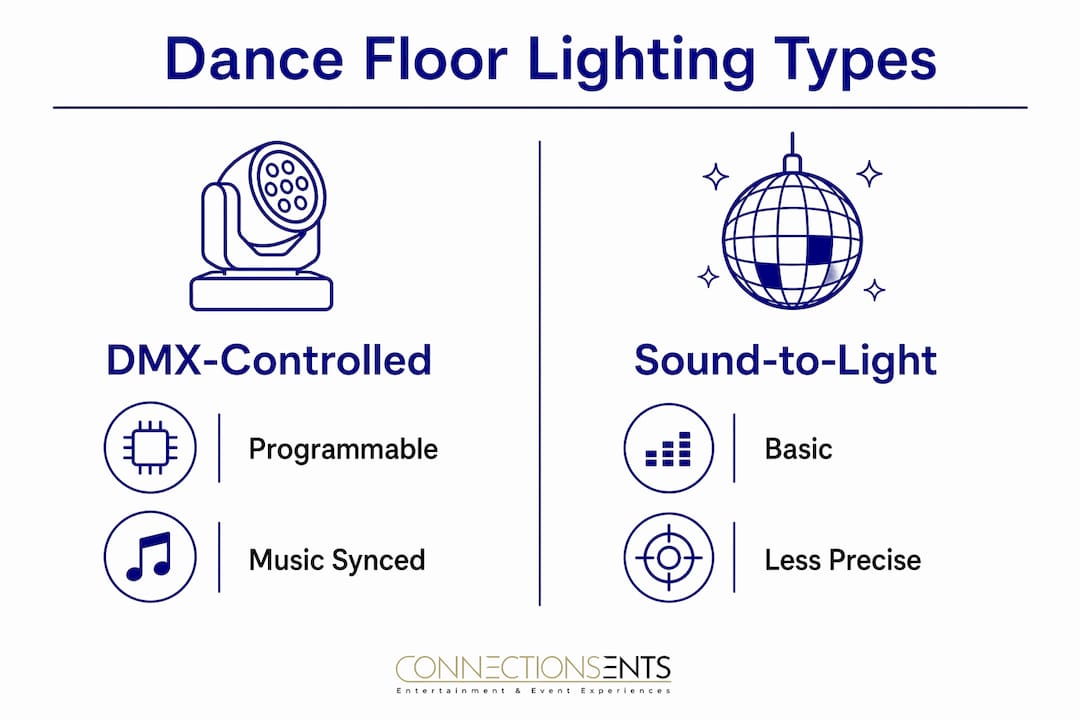
Modern LED fixtures also carry a significant practical advantage. LED dance floor systems are 85% more energy-efficient than older lighting predecessors. That efficiency means less heat, lower power draw, and fewer constraints on historic or listed venues with limited electrical capacity.
Pro Tip: Ask your lighting supplier whether their rig runs on DMX. If they cannot answer that question confidently, the quality of the result will reflect it.
How does dance floor lighting influence atmosphere and guest experience?
Lighting shapes behaviour in ways that music alone cannot. The physical act of dimming the room and activating the dance floor effects tells guests, without a single word, that it is time to move. Dance floor lighting is not just decoration but an event production element crucial for maintaining energy and guiding guest behaviour throughout the night.
The effect on photography is equally significant. Dynamic lighting creates depth, colour contrast, and movement in photos that flat, overhead lighting simply cannot produce. Your photographer will capture images that feel alive rather than staged. The key is avoiding laser dot effects, which appear as distracting specks across faces in photographs.
Balance is critical. Excessive brightness or intense club-style lighting can make guests feel self-conscious or create an atmosphere that feels inappropriate for a formal wedding. The goal is energy and warmth, not a nightclub.
A well-designed lighting plan follows the energy arc of the evening:
- Ceremony and drinks reception: Soft, warm white uplighting. No movement. Guests settle and socialise.
- Wedding breakfast: Gentle colour wash, low intensity. Conversation remains easy. The mood is celebratory but calm.
- First dance: A single spotlight on the couple. All other lights dim. The moment feels cinematic.
- Party phase: Moving heads activate. Colours shift. The floor fills with light and energy.
- Last dance: Lights soften again. A warm, golden tone signals the close of the evening.
Lighting is the invisible architecture of your wedding reception. Guests will not consciously notice the lighting rig, but they will feel its effect in their mood, their willingness to dance, and their memories of the night.
Pro Tip: Ask your DJ or lighting technician to programme a specific lighting cue for your first dance. A single follow spot with a slow colour fade creates a genuinely memorable moment that no standard preset can replicate.
Layering lighting sources is the professional approach to creating the right atmosphere at any wedding. Static ambient light provides the base, uplighting adds colour depth, and dynamic production lights deliver the energy peaks. Each layer serves a distinct purpose.
What practical factors should couples consider when choosing dance floor lighting?
Budget is the first practical consideration. Professional wedding lighting packages typically cost between £800 and £2,500, while DIY setups can come in under £300. The gap in quality between those two options is significant. A professional rig includes DMX programming, a trained technician, and fixtures that perform reliably for the full duration of the event.
The wedding entertainment budget breakdown for most UK couples allocates roughly 10–15% of the total entertainment spend to lighting. That proportion tends to rise when couples see the difference professional lighting makes to their photographs and guest experience.
The strongest practical argument for hiring a single provider for both DJ and lighting is coordination. Coordinated lighting and music from a single provider ensures natural atmosphere shifts and avoids clashing effects. When the DJ and the lighting technician are the same person, or work from the same run sheet, every lighting change lands exactly where it should in the music.
Installation is another area where professional knowledge pays off. Key considerations include:
- Power supply: Historic and listed venues often have limited or protected electrical circuits. Confirm available power before booking any rig.
- Cable management: Trailing cables across a dance floor are a safety hazard. Wireless, battery-operated LED fixtures eliminate cables entirely and are the preferred choice for venues with restricted layouts.
- Rigging points: Moving heads and wash lights require overhead rigging. Not every venue has suitable anchor points. Check this early.
- Noise: Some older fixture types produce audible fan noise. Modern LED fixtures run silently, which matters during speeches and quieter moments.
Pro Tip: When visiting your venue, photograph the ceiling and note the positions of existing power outlets. Share these with your lighting supplier before your planning meeting. It saves time and prevents surprises on the day.
Avoid cheap sound-to-light fixtures. DMX-controlled systems provide professional synchronisation with the music beat, while basic sound-to-light units blink randomly and produce an amateurish effect that no amount of good music can compensate for.
How to integrate dance floor lighting with music and venue design
The best wedding receptions feel effortless because the lighting and music tell the same story at the same time. That result requires planning, not luck. Proper synchronisation of lighting changes with music cues significantly improves the flow and excitement of the reception.
The starting point is the DJ run sheet. Your DJ should map out the key moments of the evening, and your lighting plan should mirror that structure. Every major transition, the end of the wedding breakfast, the first dance, the opening of the dance floor, should have a corresponding lighting cue.
Layering is the technique that separates a good lighting plan from a great one. Effective lighting design requires layering static ambient, uplighting, and dynamic programmable effect lights for full atmosphere control. Static lights never switch off. They provide the base. Uplighting adds colour. Dynamic lights deliver the energy when the party phase begins.
Venue architecture deserves attention too. Stone walls, exposed brick, and vaulted ceilings all respond beautifully to uplighting. A gobo projector can cast your monogram or a floral pattern across a plain white wall, adding a personalised visual element without additional decor spend. Marquees benefit from overhead festoon lighting combined with perimeter uplighting to create warmth in what would otherwise feel like a blank space.
The practical steps for integrating lighting with your wedding evening entertainment are straightforward:
- Share your DJ run sheet with your lighting supplier at least four weeks before the wedding
- Agree on specific colour palettes for each phase of the evening
- Request a lighting walkthrough at the venue during setup, before guests arrive
- Confirm that your photographer knows the lighting plan so they can position themselves for key moments
- Ask for a “safe mode” setting that your DJ can activate if any fixture malfunctions during the event
The goal throughout is that lighting enhances the design of your wedding rather than competing with it. Colour choices should complement your floral palette and linen colours. A wedding with ivory and sage green decor benefits from warm white and soft green uplighting, not vivid red and blue wash lights.
Key takeaways
Wedding dance floor lighting is a production element, not a decoration, and the quality of your lighting rig directly shapes how energised, comfortable, and engaged your guests feel throughout the reception.
| Point | Details |
|---|---|
| Define it correctly | Dance floor lighting is production lighting targeting the dance area, distinct from general ambient lighting. |
| Prioritise DMX control | DMX-programmed rigs synchronise with music and deliver professional results; sound-to-light units do not. |
| Layer your lighting | Combine static ambient, uplighting, and dynamic effects to control atmosphere across every phase of the evening. |
| Book a single provider | Hiring one supplier for DJ and lighting ensures coordinated cues and avoids clashing effects. |
| Budget realistically | Professional packages deliver a quality gap over DIY setups that shows clearly in photographs and guest experience. |
Darren’s view: why lighting is the most underrated wedding decision
Couples spend months choosing flowers, stationery, and table settings. Most spend less than an hour thinking about lighting. That imbalance consistently produces the same result: a beautiful room that feels flat the moment the evening begins.
I have seen this play out at hundreds of events. The couples who invest in a proper production lighting rig always describe their reception as “electric” or “the best party we have ever been to.” The couples who rely on the venue’s house lights and a basic sound-to-light unit often say the evening “didn’t quite take off.” The difference is almost always the lighting.
The advice I give every couple is this: treat lighting as part of your entertainment budget, not your decor budget. It belongs alongside the DJ and the music, because it performs the same function. It controls energy, guides behaviour, and creates the emotional peaks that guests remember.
One thing I feel strongly about is the wireless fixture question. Cables across a dance floor are not just unsightly. They are genuinely dangerous, particularly later in the evening when guests are less cautious. Wireless LED fixtures cost a little more to hire, but the safety and aesthetic benefit is worth every penny.
The couples who get this right are the ones who brief their lighting supplier as thoroughly as they brief their florist. Share your colour palette, your run sheet, your venue photographs, and your vision. A good lighting technician will translate all of that into something that makes your guests feel exactly what you want them to feel.
— Darren
How Connections Entertainment can help with your wedding lighting
Connections Entertainment provides combined DJ and lighting packages designed specifically for wedding receptions across Norfolk and East Anglia. Every package includes DMX-programmed production lighting coordinated directly with the DJ run sheet, so every lighting cue lands at exactly the right moment in the music.
The team handles installation, rigging, and technical management throughout the event, leaving you free to enjoy your reception. Wireless fixtures are available for venues with restricted power or historic layouts. For couples who want a single point of contact for their entire evening entertainment, including professional event entertainment services covering lighting, music, and more, Connections Entertainment offers tailored packages to suit every venue and budget. You can also browse unique entertainment ideas for 2026 to see the full range of options available for your wedding day.
FAQ
What is the difference between uplighting and dance floor lighting?
Uplighting refers to fixtures placed at floor level to wash walls and architectural features in colour, creating ambient depth across the whole room. Dance floor lighting specifically targets the dance area with dynamic, moving effects designed to energise guests and signal the party phase.
Do I need a separate technician for wedding dance floor lighting?
Not always. Many professional DJs operate DMX-controlled lighting rigs as part of their service, programming cues to match the music. A separate lighting technician is worth considering for larger venues or complex multi-zone rigs.
How far in advance should I book wedding dance floor lighting?
Book your lighting supplier at the same time as your DJ, typically 12–18 months before the wedding for popular dates. Confirm the technical details, including power requirements and rigging points, at least four weeks before the event.
Can dance floor lighting work in a marquee?
Yes. Marquees are well suited to production lighting because they offer a blank canvas with no fixed architectural constraints. Overhead festoon lighting combined with perimeter uplighting and moving heads creates a warm, energised atmosphere that works particularly well in marquee settings.
Will dance floor lighting affect my wedding photographs?
Good dance floor lighting significantly improves wedding photography by adding colour, depth, and movement to images. Avoid laser effects, which create distracting dot patterns across faces. Brief your photographer on the lighting plan so they can position themselves for the best shots during key moments.