
What is wedding background music: your full guide
Discover what wedding background music is and how it shapes your big day! Enhance guest experience with our complete guide to perfect tunes.
TL;DR:
- Wedding background music creates a relaxed atmosphere, guiding guests through non-dance moments and transitions.
- Careful selection of anchor songs and flexible live playing ensure a seamless, emotionally resonant experience throughout the day.
Most couples spend hours choosing their first dance song and almost no time thinking about the music playing while guests arrive, eat, and mingle. Yet wedding background music shapes how your guests feel from the moment they walk through the door. It sets the emotional tone, fills awkward silences, and keeps the atmosphere moving in the right direction throughout the entire day. This guide explains exactly what wedding background music is, when to use it, and how to choose it well.
Table of Contents
- Key takeaways
- What is wedding background music?
- Key moments for background music
- How to choose the best background music
- Common pitfalls to avoid
- Building your wedding music playlist
- My take on wedding background music
- Let Connectionsentertainment handle your wedding music
- FAQ
Key takeaways
| Point | Details |
|---|---|
| Background music is not just filler | It actively shapes guest mood during arrivals, meals, and transitions throughout the day. |
| Timing matters as much as song choice | Each segment from prelude to dinner requires a different musical energy and duration. |
| Anchor songs come first | Choose your key songs first, then build background playlists around them to maintain flow. |
| Professionals adapt in real time | Experienced DJs and bands read the room and adjust music live, which preset playlists cannot do. |
| Intentional gaps improve the experience | Leaving moments without music prevents fatigue and gives speeches and conversation room to breathe. |
What is wedding background music?
Wedding background music is the music playing during non-dance moments of your wedding day. It is not the song you walk down the aisle to, and it is not the track that gets everyone on the dancefloor at 10pm. It is the quieter, mood-setting music that runs underneath everything else: the gentle instrumental piece playing as guests take their seats, the soft acoustic set during your wedding breakfast, the light jazz drifting through the cocktail hour.
The purpose is atmosphere, not performance. Background music should feel present without demanding attention. When it works well, guests are not consciously listening to it. They are simply relaxed, comfortable, and enjoying themselves. That is exactly the effect you want.
It is worth understanding how background music differs from your featured songs. Featured songs are deliberate, emotional moments: your processional, your first dance, your recessional. Background music exists to fill and enhance everything in between. Think of it as the connective tissue of your wedding day’s soundtrack.
Common styles used for wedding background music include:
- Instrumental covers of popular songs, which feel familiar without being distracting
- Acoustic sets, whether live or recorded, which add warmth and intimacy
- Light jazz or bossa nova, which works particularly well during cocktail hours and dinners
- Soft classical music, ideal for ceremony preludes and formal dining moments
- Easy listening pop, which suits receptions where you want energy without volume
The genre you choose will depend on your personal taste, your venue, and the demographic of your guests. A mix of styles across the day tends to work better than sticking rigidly to one.
Key moments for background music
Understanding when to use background music is just as important as knowing what to play. Your wedding day has several distinct segments, and each one benefits from a different musical approach.
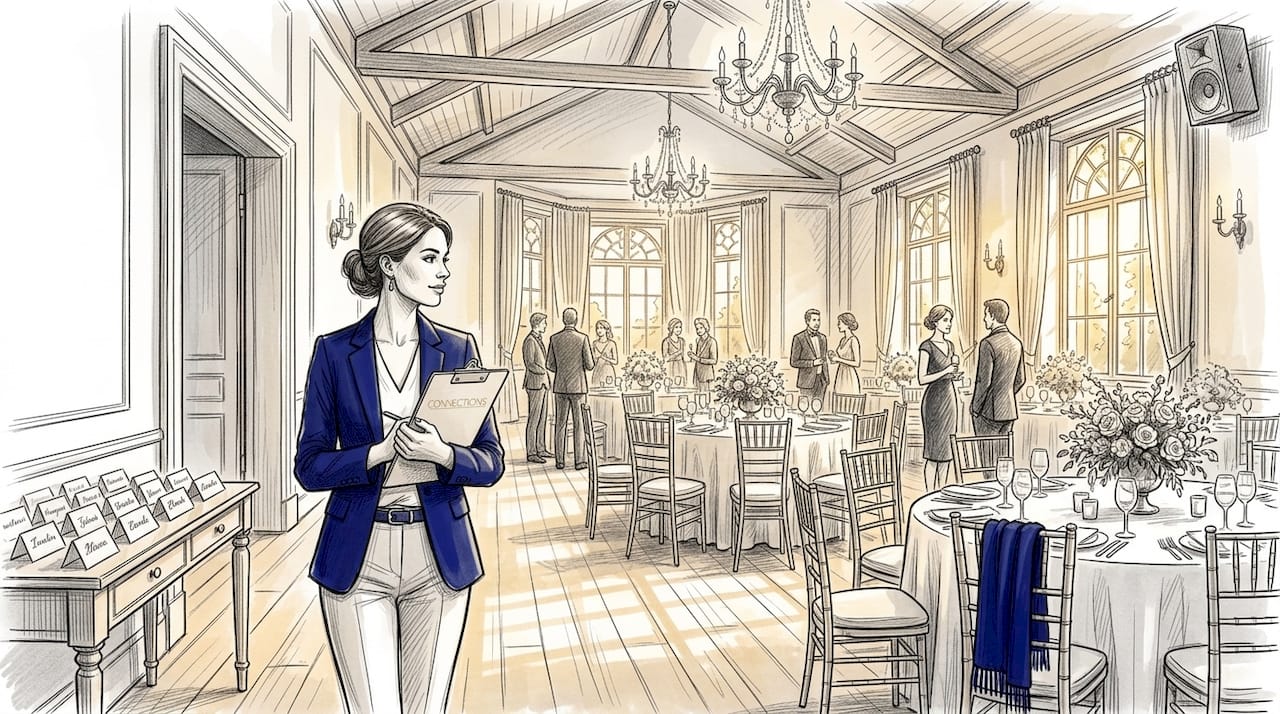
Wedding ceremony music typically includes a prelude lasting 10 to 30 minutes, with the processional itself running 3 to 10 minutes depending on venue size and the number of participants. The prelude is pure background music. It welcomes guests, settles nerves, and builds gentle anticipation before the ceremony begins.
Here is a practical breakdown of the key segments and what each one needs:
| Segment | Recommended duration | Musical energy |
|---|---|---|
| Prelude (ceremony arrival) | 10 to 30 minutes | Calm, welcoming, soft |
| Cocktail hour | Approximately 60 minutes | Upbeat but conversational |
| Wedding breakfast/dinner | 1 to 2 hours | Relaxed, warm, subtle |
| Post-ceremony transitions | 10 to 20 minutes | Light and unobtrusive |
The cocktail hour and dinner music commonly spans 60 to 120 minutes in total, and the goal during both segments is to facilitate conversation rather than compete with it. Volume matters here. Background music during dinner should sit low enough that guests can talk across the table without raising their voices.
Wedding music includes several distinct phases beyond just the processional: preludes, interludes, recessionals, and postludes each carry their own atmosphere role. Planning music for each of these phases separately, rather than treating them as one continuous playlist, gives you far more control over the emotional arc of your day.
- Prelude: Guests arrive and find their seats. Calm, welcoming music sets the tone.
- Ceremony music: Processional, signing music, and recessional. These are featured songs, not background.
- Cocktail hour: Guests mingle and relax. Upbeat but subtle tracks work best here.
- Wedding breakfast: Background music supports conversation and maintains warmth.
- Evening reception: Music shifts in energy as the dancefloor opens.
How to choose the best background music
Choosing the right wedding background music comes down to three things: your personal taste, your guests, and the mood you want to create at each point in the day.
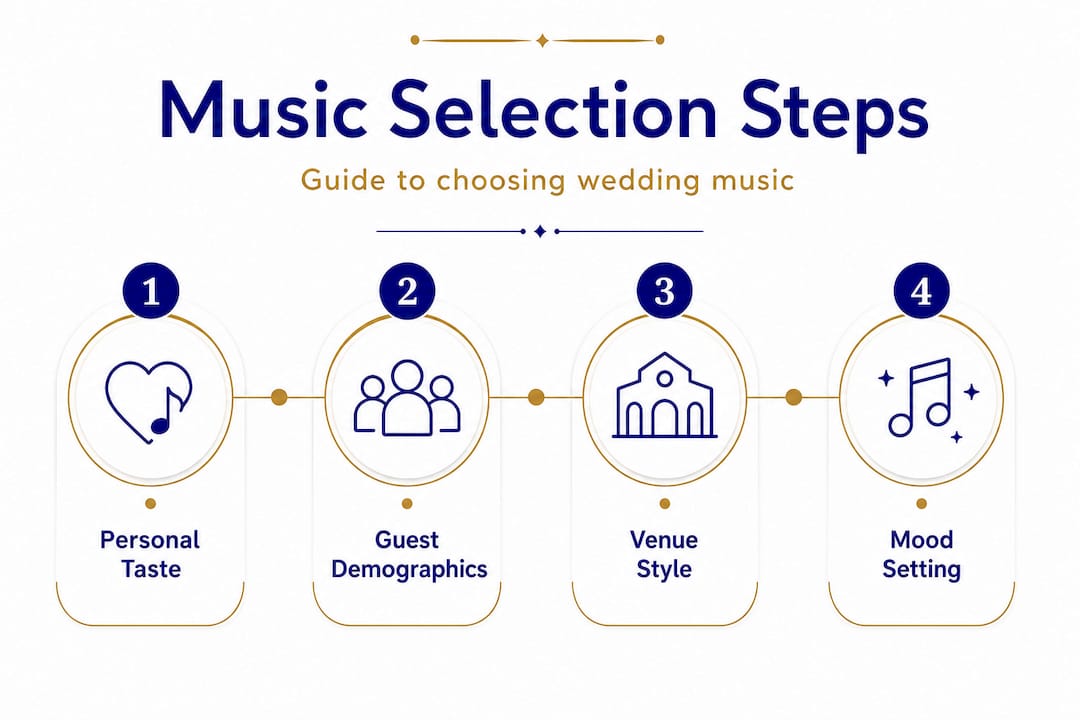
Start with your anchor songs. These are the key emotional moments: your aisle song, your signing music, your first dance. Choosing these first gives you a clear musical identity to build around. Your background playlists should complement these anchors in style and energy rather than clash with them.
When it comes to genre, mixing eras and styles is almost always a better approach than going too niche. A playlist that moves from Norah Jones to Frank Sinatra to a gentle acoustic cover of a modern hit will keep guests of all ages engaged. Guests in their 60s and guests in their 20s will both find something familiar.
Here are the key considerations when selecting background tracks:
- Instrumental versus vocal tracks: Instrumental versions reduce distraction during speeches and dining, while vocal tracks add personality during cocktail hours
- Clean versions of songs: Always check for clean versions of any track you want to include, particularly for songs with explicit lyrics. This is especially important at family weddings with children or in religious venues
- Tempo and energy: Match the tempo to the moment. Slow and soft for ceremony arrivals, slightly more upbeat for cocktails, warm and unhurried for dinner
- Song length and transitions: Avoid tracks that end abruptly or have jarring intros. Smooth transitions between songs keep the atmosphere consistent
Songs like ‘Marry You’ by Bruno Mars have ranked as the most popular wedding background and event song for three consecutive years across thousands of weddings, which tells you something about what tends to land well with mixed audiences. Familiar, uplifting, and easy to listen to without demanding full attention.
Pro Tip: Give your DJ or band a shortlist of songs you love and a shortlist of songs you absolutely do not want played. This gives professionals the context they need to make good decisions on the night without you having to micromanage every track.
Professionals can read the room and adapt music live based on crowd energy and timing shifts. This is something a preset playlist simply cannot do. Sharing your preferences while allowing your entertainer some flexibility is one of the most effective things you can do for your wedding music.
Common pitfalls to avoid
Even couples who have thought carefully about their wedding music playlist can fall into a few predictable traps. Knowing what to watch out for will save you a lot of stress.
The biggest mistake is assuming music should play constantly from start to finish. Intentional gaps in music actually improve the atmosphere by preventing listener fatigue and giving natural moments of ambience. Silence during a heartfelt speech, or just before the first dance is announced, can be far more powerful than continuous sound.
Other common pitfalls include:
- Repetitive playlists: Playing the same genre or tempo for two hours straight will drain energy from the room. Vary the mood across segments
- Ignoring the ‘do not play’ list: If there is a song that holds a negative memory for you or your partner, communicate that clearly to your entertainer. A professional will always respect this
- Misjudging volume: Background music that is too loud becomes foreground music. During dinner especially, keep levels low enough for easy conversation
- Underestimating timing: Plan your music lengths based on your actual guest count and venue layout. A room of 120 guests takes longer to seat than a room of 40, which affects how long your prelude needs to run
- Forgetting transition moments: The gap between ceremony and reception, or between dinner and the evening party, needs music too. These transitions are where atmosphere can drop if left unplanned
Pro Tip: Ask your venue coordinator how long it typically takes to seat guests for dinner in that specific room. This gives you a much more accurate target for how many tracks to include in your dinner playlist.
Building your wedding music playlist
Putting together a wedding background music playlist is more manageable when you treat each segment of the day as its own mini-playlist rather than one long continuous queue.
- List your segments: Prelude, cocktail hour, dinner, and any transition periods. Assign a duration to each based on your timeline.
- Choose your anchor songs first: Lock in your processional, signing music, first dance, and recessional before building anything else.
- Build playlists around the anchors: Match the mood and genre of your background music to the emotional tone of the nearest anchor song.
- Share your preferences with your entertainer: Give your DJ or band a document listing your must-plays, your do-not-plays, and a few notes on the overall feel you want. You can find useful guidance on this through a wedding wish list approach.
- Allow for live adaptation: A good entertainer will not stick rigidly to a preset list if the room is telling them something different. Build in flexibility.
- Check copyright and venue requirements: Some venues require a PRS licence to play recorded music. If you are using a professional DJ or entertainment service, this is usually covered, but it is worth confirming in advance.
Live music and recorded playlists are not mutually exclusive. Many couples use a live acoustic duo during the cocktail hour and switch to a DJ for the reception. Understanding what is wedding AV can help you plan the technical side of this combination effectively.
My take on wedding background music
I have seen hundreds of weddings where the couple spent weeks debating the first dance song and then handed the rest of the music over to chance. And every time, it shows. Not in a catastrophic way, but in those small, flat moments where the energy dips and nobody quite knows why.
What I have learned is that background music is where the real atmosphere lives. The first dance is a moment. The background music is the entire day. When it is right, guests feel at ease without knowing why. Conversations flow more naturally. The room feels alive even during a quiet dinner.
The couples who get this right are not necessarily the ones with the biggest music budgets. They are the ones who have thought about pacing. They know that the energy at 3pm during cocktails should feel different from the energy at 7pm during dinner, and they have communicated that clearly to their entertainer.
My honest advice is this: choose your anchor songs, share your vision with a professional who knows how to read a room, and then trust them. The best wedding music experiences I have witnessed were the result of a couple who gave clear direction and then allowed an experienced entertainer the freedom to bring it to life.
— Darren
Let Connectionsentertainment handle your wedding music
Getting wedding background music right takes planning, experience, and the right people in the room. At Connectionsentertainment, we work with couples across Norfolk and East Anglia to plan and deliver wedding entertainment that fits every moment of the day. From experienced wedding DJs and live performers who know how to read a room, to full event coordination that covers music timing and atmosphere management, we take the stress out of the planning process.
Whether you need a DJ for the evening reception, a live acoustic act for your cocktail hour, or a full entertainment package from ceremony to last dance, our team can help you build something personal and memorable. Find out more about our wedding entertainment services or get in touch to start planning your day.
FAQ
What is wedding background music?
Wedding background music is mood-setting music played during non-dance moments of the day, such as guest arrivals, cocktail hours, and dinner. It creates atmosphere without demanding attention, keeping guests relaxed and the event flowing naturally.
When should background music play at a wedding?
Background music should play during the prelude before the ceremony, throughout the cocktail hour, and during the wedding breakfast or dinner. Ceremony music typically begins 10 to 30 minutes before the service starts.
What are the best genres for wedding background music?
Instrumental covers, light jazz, acoustic sets, and soft classical music all work well as wedding background music. The best choice depends on your venue, guest demographic, and the mood you want to create at each point in the day.
Should I give my DJ a full playlist or let them choose?
The most effective approach is to share your must-play songs, your do-not-play list, and a general mood direction, then allow your DJ the freedom to adapt. Experienced entertainers adjust music live based on how the room responds, which produces better results than a rigid preset list.
How long should a wedding dinner playlist be?
Dinner background music typically runs for one to two hours. Build your playlist with slightly more tracks than you think you need, and allow your entertainer to extend or shorten it based on how the evening progresses.