
What is a marquee venue setup? Your planning guide
Discover what is a marquee venue setup and how it offers flexibility for your next event. Create the perfect atmosphere anywhere you choose!
TL;DR:
- A marquee venue setup is a temporary, customizable structure suited for various events, from weddings to corporate functions. Planning involves early site assessment, layout design, supplier coordination, and understanding legal requirements such as the 28-day rule and licensing. Marquee benefits include location flexibility and bespoke design, but weather and logistical challenges require thorough preparation.
A marquee venue setup is defined as a bespoke, temporary structure erected on a chosen site to create a fully functional event space for occasions such as weddings, corporate functions, and private parties. Unlike fixed venues, a marquee gives you complete control over location, layout, and atmosphere. Professional marquee hire in the UK ranges from £300 to over £10,000 depending on size, ground conditions, and accessories. That wide range reflects just how adaptable these structures are, from a modest garden party to a large-scale corporate dinner. Understanding what is a marquee venue setup means understanding that flexibility is the core value on offer.
What are the main features of a marquee venue setup?
A marquee venue setup is built from several distinct components, each of which shapes the guest experience. The structure itself comes in three main types: pole marquees, frame marquees, and clearspan marquees. Pole marquees use central masts and guy ropes, making them a classic choice for garden weddings. Frame marquees need no internal poles, which frees up floor space and suits smaller or irregularly shaped sites. Clearspan marquees are the largest category, using an aluminium frame to span wide, column-free interiors suited to corporate events and large receptions.
Beyond the shell, the marquee venue features that matter most to guests are the ones they feel rather than see. These include:
- Flooring: Matting, wooden dance floors, or carpeted sections protect guests from uneven ground and define different zones within the space.
- Lighting: Festoon lights, LED uplighters, and chandeliers transform the interior atmosphere, particularly for evening events.
- Heating and ventilation: Thermostat-controlled heating combined with proper ventilation or air conditioning is non-negotiable given the UK’s unpredictable weather.
- Power supply: A dedicated generator handles high-draw equipment such as catering appliances, AV systems, and lighting rigs.
- Furniture: Tables, chairs, bars, and staging are typically hired alongside the structure and arranged to match your event layout.
- Lining and décor: Fabric linings, event backdrops, and draping convert a bare canvas shell into a polished venue interior.
The combination of these elements determines whether your marquee feels like a temporary tent or a genuinely impressive venue. Choosing components based on your guest count and site conditions is the single most important decision you will make at the planning stage.
Pro Tip: Match your flooring choice to the ground beneath. Soft ground requires a more substantial sub-floor system, while hard standing such as a patio or car park can support lighter matting options, which reduces both cost and installation time.
How is a marquee event planned and executed?
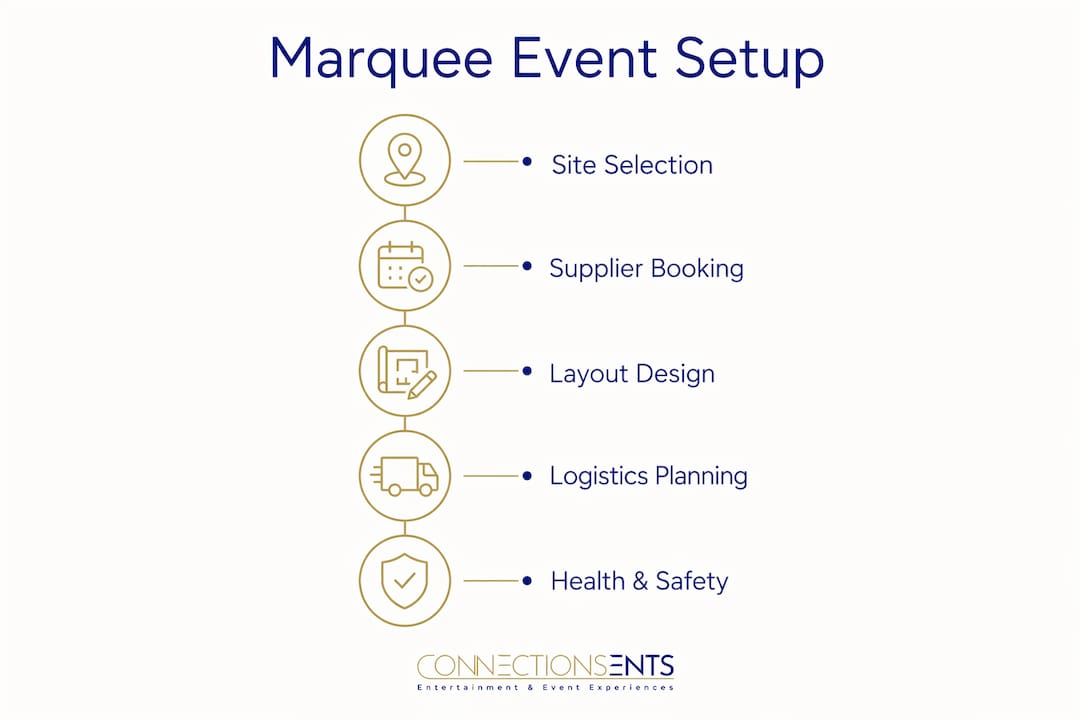
Planning a marquee event follows a clear sequence, and starting early is the most reliable way to avoid problems. The process typically runs across several months, with the physical installation taking place 1–2 days before the event and dismantling completed 1–2 days after. That window means you need to factor site access into your overall schedule from the outset.
A well-managed marquee event follows these key planning steps:
- Choose your site. Confirm the location is large enough for the marquee footprint plus catering areas, guest parking, and emergency access routes.
- Commission a site visit. A professional site assessment checks ground stability, underground utilities, and access routes. This step separates smooth setups from last-minute failures.
- Plan your layout. Experts recommend using 3D CAD drawings to map out catering zones, dance floors, staging, and seating at least six months in advance for large events.
- Coordinate your suppliers. Confirm delivery schedules for the marquee structure, furniture, catering equipment, AV hire, and entertainment so that each supplier arrives in the correct order.
- Plan your power. Identify whether mains power is available on site or whether a generator is required. High-draw equipment such as catering ovens and AV production systems must be accounted for in the power plan.
- Confirm heating and ventilation. Book climate control equipment early, particularly for events in spring or autumn when temperatures can shift significantly between day and evening.
- Arrange post-event removal. Agree a clear dismantling schedule with your marquee supplier so that the site is returned to its original condition within the agreed timeframe.
The venue layout you create inside the marquee directly affects how entertainment, catering, and guest flow work together on the day. Treating layout as a logistical decision rather than a purely aesthetic one produces far better results.
Pro Tip: Book your marquee supplier before you finalise any other vendors. The marquee footprint determines what everything else can do, from the catering setup to the entertainment stage position.
What legal and logistical requirements apply to marquee setups?
Marquee events in the UK sit within a specific regulatory framework that every event planner needs to understand before signing contracts. Getting this wrong can result in a cancelled event or a fine, so clarity here is non-negotiable.
The key legal and logistical considerations are:
- The 28-day rule: UK planning rules allow temporary structures on private land for up to 28 days per year without full planning permission. Crucially, setup and takedown days count toward that total. Events in Areas of Outstanding Natural Beauty (AONBs) or near listed buildings may require permission regardless of duration.
- Temporary Event Notice (TEN): Any licensable activity, including the sale of alcohol or regulated entertainment, requires a TEN submitted to the local authority. A TEN must be applied for at least 10 clear working days before the event.
- Alcohol licensing nuances: Private weddings where alcohol is served free of charge to guests generally do not require a licence. Commercial bar services selling alcohol to guests do require either a TEN or a premises licence. This distinction catches many first-time event planners off guard.
- Site condition checks: Confirm ground stability, proximity to overhead cables, and the location of underground utilities before any pegs are driven into the ground.
- Insurance: Public liability insurance is standard for professional marquee hire, but you should verify coverage limits and confirm whether your event activities fall within the policy scope.
- Emergency access: Fire exits, clear walkways, and vehicle access for emergency services must be built into the site plan from the start.
“The 28-day permitted development rule gives private landowners genuine flexibility for hosting events, but it is not a blanket exemption. Protected landscapes, conservation areas, and proximity to listed buildings all trigger additional requirements. Always check with your local planning authority before committing to a site.”
Health and safety compliance also extends to the behind-the-scenes footprint of the event. Catering vehicles, waste collection, and supplier access routes all need dedicated space that is separate from guest areas. Underestimating this hidden footprint is one of the most common and costly mistakes in marquee event planning.
What are the benefits and challenges of marquee venues?
Marquee venues offer a level of design freedom that fixed venues simply cannot match. The benefits of marquee venues centre on total environmental control: you choose the location, the layout, the décor, and the atmosphere from a blank canvas. That flexibility is particularly valuable for weddings on private estates, corporate events on company grounds, or parties in locations with personal significance to the host.
The challenges are real, however, and planning a marquee event without accounting for them leads to avoidable stress and cost overruns. Weather is the most obvious variable. Even with heating and ventilation in place, extreme conditions such as high winds or heavy rain can affect guest comfort and, in rare cases, structural safety. Logistics complexity is another genuine challenge: coordinating multiple suppliers across a temporary site with no fixed infrastructure requires detailed project management.
| Benefit | Challenge |
|---|---|
| Complete freedom over location and site choice | Weather variability requires heating, ventilation, and contingency planning |
| Fully customisable layout, décor, and atmosphere | Logistics coordination across multiple suppliers adds complexity |
| No venue hire restrictions on entertainment or catering | Hidden costs including flooring, power, and access can increase budgets |
| Suitable for guest lists of almost any size | Installation and removal windows require additional site access days |
| Ideal for private land, estates, and unique locations | Legal requirements including TENs and planning rules must be managed carefully |
The cost picture deserves particular attention. The headline hire fee covers the structure, but flooring, heating, power, furniture, and catering infrastructure each add to the total. Experienced event planners build a detailed cost schedule that accounts for every component before committing to a marquee over a fixed venue. For many events, the investment is absolutely worthwhile. For others, a private party venue with existing infrastructure may offer better value.
Key takeaways
A marquee venue setup delivers maximum design flexibility, but it requires thorough planning across legal compliance, site logistics, and supplier coordination to succeed.
| Point | Details |
|---|---|
| Definition and structure types | A marquee venue setup is a temporary, bespoke structure available in pole, frame, and clearspan formats. |
| Essential components | Flooring, heating, ventilation, power, lighting, and furniture all shape guest comfort and must be planned together. |
| Planning timeline | Installation takes 1–2 days before the event; begin layout planning at least six months ahead for large events. |
| Legal requirements | The UK 28-day rule and TEN applications govern most marquee events; alcohol licensing depends on whether it is sold or served free. |
| Benefits vs challenges | Marquees offer unmatched location freedom and design control, but weather, logistics, and hidden costs require careful management. |
Darren’s view: what event planners get wrong about marquees
The most common mistake I see is treating the marquee as the last decision rather than the first. Clients will book a caterer, confirm a band, and then realise the marquee footprint does not accommodate the stage they had in mind. The structure dictates everything else. Get that decision made early, and the rest of the planning falls into place far more naturally.
Site visits are another area where people cut corners and then regret it. A photograph of a garden tells you almost nothing about ground conditions, utility locations, or vehicle access. A professional walking the site with you for an hour can save you thousands of pounds and a great deal of stress on the day itself.
The detail I find most underestimated is the behind-the-scenes space. Guests see the beautifully lit interior. They do not see the catering tent, the generator, the waste area, and the supplier parking that make the whole thing function. If you have not allocated enough space for those elements, the event day becomes a logistical scramble.
My honest advice: treat a marquee event like a construction project with an entertainment brief attached. Plan the infrastructure first, then build the guest experience on top of it. When those two things are properly aligned, a marquee genuinely does create something that no fixed venue can replicate. The sense of occasion is different. Guests notice it, and they remember it.
— Darren
How Connections Entertainment supports marquee events
A marquee provides the space, but the entertainment fills it with energy. Connections Entertainment works with event planners across Norfolk and East Anglia to match the right entertainment to the specific layout and atmosphere of each marquee event. Whether you need a DJ who can work within a clearspan structure, live music that suits a wedding reception, or event entertainment that fits a corporate brief, the team at Connections Entertainment coordinates around your marquee setup rather than asking you to compromise on it. Browse the full range of professional entertainers available for marquee events, or get in touch to discuss your specific requirements and how entertainment can be integrated into your venue plan from the start.
FAQ
What is a marquee tent in event planning?
A marquee tent is a temporary, freestanding structure hired to create an event space on a chosen site. It serves as the physical venue for weddings, corporate events, and private parties where no fixed building is available or suitable.
How far in advance should I plan a marquee event?
Large marquee events benefit from planning that begins at least six months ahead, particularly for layout design using 3D CAD tools. Smaller events can be organised in less time, but supplier availability and legal applications such as TENs require a minimum of several weeks’ notice.
Do I need planning permission for a marquee in the UK?
The UK’s 28-day rule allows temporary structures on private land without full planning permission for up to 28 days per year, including setup and removal days. Events in protected areas such as AONBs or near listed buildings may require additional consent from the local planning authority.
What is a Temporary Event Notice and when do I need one?
A Temporary Event Notice (TEN) is a legal notification required for licensable activities at a temporary venue, including selling alcohol or hosting regulated entertainment. It must be submitted to the local authority at least 10 clear working days before the event date.
What is the typical cost of a marquee venue setup in the UK?
Professional marquee hire ranges from £300 for small setups to over £10,000 for large weddings or corporate events. Additional costs for flooring, heating, power, and furniture typically add to the base hire fee and should be budgeted for separately.