
Wedding entertainment timeline examples: your 2026 guide
Discover essential wedding entertainment timeline examples for 2026! Craft the perfect schedule that keeps your guests engaged all night.
TL;DR:
- A wedding entertainment timeline is a detailed schedule that ensures a smooth flow of musical moments and activities during your reception. It typically spans four to five hours of entertainment within a six to eight-hour wedding day, coordinating all vendors for seamless transitions. Proper planning, including assigning a timeline owner and incorporating buffers, keeps guest energy high and the event memorable.
A wedding entertainment timeline is a precise schedule outlining every musical moment, activity, and transition that shapes your big day’s atmosphere and flow. Getting it right is the difference between a reception that feels electric and one that loses momentum after the first dance. Most wedding days last between six and eight hours in total, with entertainment typically filling four to five of those hours across cocktail, dinner, and dance segments. This guide gives you detailed wedding entertainment timeline examples for classic, micro, brunch, and non-traditional weddings, alongside expert structuring advice so you can build a schedule that genuinely works for your guests and your style.
1. What is a wedding entertainment timeline?
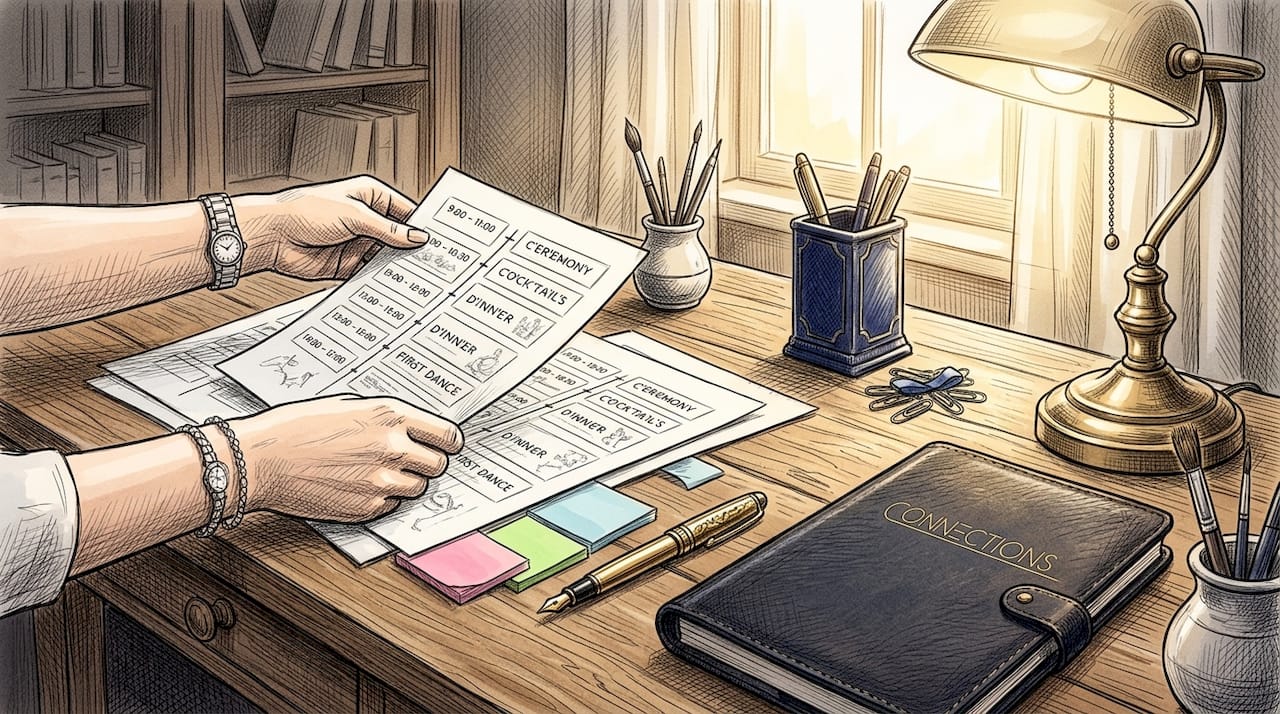
A wedding entertainment timeline is the industry term for a structured running order that maps every entertainment cue across your reception, from the first song played during the drinks reception to the final track of the evening. It differs from a general wedding day schedule because it focuses specifically on the guest experience: what they are hearing, watching, or participating in at every stage.
The timeline coordinates your DJ or live band, your MC, your AV team, and your catering staff so that every transition feels intentional rather than accidental. Without one, even the best entertainment can feel disjointed. With one, your guests move naturally from one moment to the next without noticing the joins.
A well-built entertainment timeline also reduces stress for you as a couple. When your coordinator has a clear document to follow, you are free to enjoy the day rather than manage it.
2. Core components and typical durations
Classic evening receptions typically last six to seven hours, with entertainment timed across four to five hours. Understanding the standard building blocks helps you decide what to keep, what to cut, and where to add something personal.
The main components and their typical durations are:
- Drinks reception (cocktail hour): 45 to 60 minutes. Live acoustic music or a pre-curated playlist works well here. The atmosphere should be relaxed and conversational, not loud or demanding of attention.
- Wedding breakfast (dinner service): 60 to 90 minutes. Background music at low volume keeps the room warm without competing with conversation.
- Speeches and toasts: 20 to 25 minutes in total. Each speaker should be capped at three to five minutes. Grouping all speeches together in one block prevents repeated energy dips throughout the meal.
- First dance: 3 to 5 minutes. This is the emotional centrepiece of the evening and signals the shift from dining to dancing.
- Parent dances: 5 to 10 minutes combined, often immediately following the first dance while the floor is warm.
- Cake cutting: 5 minutes. Typically placed just before the dance floor opens, giving the catering team time to serve dessert while guests gather.
- Open dance floor: 2 to 2.5 hours. This is where your DJ or band earns their fee. Energy management across this block is what separates a great night from a forgettable one.
Pro Tip: Build a 10 to 15 minute buffer between your dinner service and your first dance. Guests need time to visit the bar, use the facilities, and settle before the emotional highlight of the evening.
3. Wedding entertainment timeline examples by wedding style
The most useful way to understand entertainment timelines for weddings is to see them in action across different formats. Below are five sample wedding timelines covering the most popular styles in 2026.
| Wedding style | Sample timeline |
|---|---|
| Classic evening | 4:00pm drinks reception with acoustic duo; 5:30pm guests seated, background music begins; 6:00pm wedding breakfast served; 6:45pm speeches (3 speakers, 20 mins total); 7:30pm cake cutting; 7:45pm first dance; 8:00pm parent dances; 8:15pm dance floor opens; 11:00pm last song |
| Micro-wedding (under 30 guests) | 1:00pm ceremony; 2:00pm intimate drinks with guitarist; 3:00pm seated lunch, speeches integrated between courses; 4:30pm first dance; 5:00pm open dancing; 7:00pm close |
| Brunch reception | 10:30am ceremony; 11:15am prosecco reception with jazz quartet; 12:00pm brunch served, background playlist; 12:45pm speeches (2 speakers only); 1:30pm first dance; 2:00pm open dancing; 3:30pm close |
| South Asian fusion | 5:00pm baraat or arrival performance; 6:00pm cocktail hour with dhol drummer; 7:00pm dinner service; 8:00pm speeches and family toasts; 8:30pm sangeet performances; 9:30pm first dance; 9:45pm open dance floor; 12:00am close |
| Non-traditional | 3:00pm ceremony; 4:00pm extended cocktail hour (90 mins) with live band set; 5:30pm casual dinner, no formal seating plan; 6:30pm speeches moved to rehearsal dinner (previous evening); 7:00pm first dance; 7:15pm dance floor opens; 10:30pm after-party begins at separate venue |
The classic evening format suits most UK venues and guest lists of 80 or more. The micro-wedding timeline compresses the flow without losing any of the key emotional moments. The brunch format is growing in popularity because it naturally limits the event to a defined window, which suits couples who want a relaxed, lower-cost celebration.
Pro Tip: For South Asian fusion weddings, build a 30 minute buffer after the sangeet performances before the first dance. Live performance sets often run long, and guests need a moment to reset before the couple takes the floor.
4. How to structure your entertainment timeline for great flow
The most effective entertainment timelines prioritise flow over strict tradition. Professional DJ Michael Coombs emphasises that keeping energy consistent matters far more than following a conventional running order. Here is how to put that principle into practice.
Group your speeches. Spreading toasts across the meal creates repeated interruptions and makes it harder for guests to relax into the evening. Place all speeches in a single 20 to 25 minute block, ideally after the main course is cleared.
Sync your AV and catering teams. AV cues should be confirmed 15 minutes before speeches and dances. Dessert should be served just before the dance floor opens so guests are not choosing between eating and dancing.
Use background music strategically. During dinner, wedding background music at a low volume fills silence without demanding attention. As the evening progresses, gradually increase the energy level so the transition to dancing feels natural rather than abrupt.
Assign a timeline owner. A dedicated MC or coordinator for every entertainment cue reduces drift and keeps the event on track. This person holds the master timeline and communicates directly with your DJ, band, and catering manager throughout the night.
Build in hidden buffers. Experienced planners insert buffer time before the ceremony and before the reception begins, not just between segments. This absorbs overruns from photography, late arrivals, or extended conversations without the knock-on effect compressing the rest of the evening.
Consider your guest mix. A reception with a large number of older guests benefits from a slightly earlier dinner service and a more gradual energy build. Guidance on entertaining older wedding guests can help you balance the programme so no one feels left behind as the evening progresses.
Buffer times of 10 to 15 minutes between major transitions prevent delays from compounding across the day. Social lag is natural: guests take time to move between spaces, refill drinks, and find their seats. Building that reality into your schedule means your timeline stays accurate rather than aspirational.
5. Creative entertainment timeline ideas and modern trends for 2026
The most talked-about wedding schedule ideas in 2026 move away from the rigid evening format and towards experiences that feel personal and high-energy throughout. Non-traditional wedding flows focus on maintaining event energy by condensing timelines and removing long pauses between segments.
Here are six approaches worth considering:
- Pre-ceremony cocktail hour. Invite guests to arrive 45 minutes early for drinks and live music before the ceremony begins. This removes the awkward waiting period, warms up the room, and means your post-ceremony drinks reception can be shorter.
- Speeches at the rehearsal dinner. Moving toasts to the evening before frees up significant time during the reception and keeps the main event focused on dancing and celebration. Couples planning non-traditional flows find this particularly effective for maintaining momentum.
- Extended cocktail hour with a live band set. Rather than a 60 minute drinks reception, extend it to 90 minutes and use it as the primary live music moment of the day. This works especially well for outdoor summer weddings where the setting is at its best in the early evening.
- Private cake cutting. Instead of stopping the dance floor for a public cake cutting moment, do it privately with your photographer during the cocktail hour. Guests still see the photos; you avoid interrupting the energy of the evening.
- After-parties and multi-day celebrations. After-parties are a growing trend in 2026, extending guest engagement beyond the formal reception. A late-night venue change with a DJ set creates a second wind for guests who want to keep celebrating.
- Condensed high-energy timelines. A five-hour reception with no gaps is more memorable than a seven-hour one with long pauses. Cutting the formal programme to its best moments and filling the rest with dancing consistently produces better guest feedback.
“The best wedding receptions feel shorter than they are. That is the goal: guests leave wishing it had gone on longer, not relieved that it is over.”
Incorporating live performers into your timeline adds natural energy peaks that a DJ alone cannot replicate. A live saxophonist during the cocktail hour, a string quartet for the ceremony, or a function band for the first two hours of dancing all create distinct moments that guests remember and talk about.
Key takeaways
A well-structured wedding entertainment timeline is the single most effective tool for keeping your reception energetic, on schedule, and genuinely enjoyable for every guest.
| Point | Details |
|---|---|
| Standard entertainment duration | Plan for four to five hours of entertainment across cocktail, dinner, and dance segments. |
| Speech timing | Cap total speech time at 20 to 25 minutes and group all speakers into one block to protect energy. |
| Buffer times | Insert 10 to 15 minute buffers between major transitions to absorb natural social lag. |
| Assign a timeline owner | Give your MC or coordinator a master timeline and direct communication with all vendors. |
| Non-traditional formats work | Condensed timelines, pre-ceremony cocktail hours, and after-parties consistently improve guest experience. |
Darren’s take on wedding entertainment timelines
The couples I see struggle most with their reception are not the ones who chose the wrong band or the wrong DJ. They are the ones who never decided who was in charge of the clock. A timeline without an owner is just a wish list.
The single change that makes the biggest difference is assigning one person, whether that is your MC, your wedding coordinator, or a trusted supplier, to hold the master schedule and make real-time calls when things drift. Your DJ cannot see that the speeches are running long if nobody tells them. Your catering manager cannot hold dessert service if they are not in the loop. Communication between vendors is not a nice-to-have; it is the mechanism that makes your timeline function.
I also think couples underestimate how much the cocktail hour sets the tone for everything that follows. If guests arrive to silence, a half-empty room, and no clear direction, the evening starts in a hole you spend the next two hours climbing out of. A live acoustic act, a well-curated playlist, and a clearly signposted bar changes the entire atmosphere within minutes of guests walking in.
My honest advice: build your timeline around the three or four moments that matter most to you, protect those moments with buffers on either side, and then let the rest of the evening breathe. You do not need to fill every minute. You need the right minutes to land perfectly.
— Darren
Plan your wedding entertainment with Connections Entertainment
Connections Entertainment works with couples across Norfolk and East Anglia to build entertainment programmes that match their timeline, their venue, and their guests. Whether you are looking for a wedding DJ to anchor your evening, a live act to energise your cocktail hour, or a photo booth to keep guests entertained between segments, the team can help you put together a schedule that flows. Browse the full range of event entertainment options and get in touch for personalised advice on timing, act selection, and coordination. Every booking includes support from an experienced team who understand how to keep a reception on track from the first song to the last.
FAQ
What is a wedding entertainment timeline?
A wedding entertainment timeline is a structured running order that schedules every musical moment, activity, and transition across your reception. It coordinates your DJ, live acts, MC, AV team, and catering staff so the guest experience flows without gaps or confusion.
How long should wedding reception entertainment last?
Reception entertainment typically runs for four to five hours, covering the cocktail hour, dinner service, and open dance floor. The full wedding day, including preparation and ceremony, usually lasts six to eight hours in total.
How many speeches should be in a wedding timeline?
Speeches should total no more than 20 to 25 minutes, with each speaker limited to three to five minutes. Grouping all toasts into a single block after the main course prevents repeated energy dips throughout the meal.
When should the dance floor open at a wedding?
The dance floor typically opens after the first dance and parent dances, around 90 minutes into the reception. Serving dessert just before the floor opens gives guests a natural cue to move and keeps energy high as dancing begins.
Can you have a wedding reception without a traditional timeline?
Yes. Non-traditional formats such as extended cocktail hours, speeches moved to the rehearsal dinner, and condensed five-hour receptions are all effective alternatives. The key is maintaining momentum and avoiding long pauses between segments.