
Role of venue coordinators in events explained
Discover the crucial role of venue coordinators in events. Learn how they ensure a seamless experience for your special occasions.
TL;DR:
- Venue coordinators manage the physical operations of the event space, ensuring safety, setup, and compliance. They work directly for the venue and focus on venue-related tasks, not guest experience or external vendors. Effective collaboration between venue coordinators and event planners ensures a smooth, well-organized event day.
A venue coordinator is a facility-focused professional employed by the venue to manage its physical operations before, during, and after an event. The role of venue coordinators in events is distinct from that of a general event planner. They oversee the space itself, not the overall guest experience. Understanding this distinction helps you plan more effectively, whether you are organising a wedding in Norfolk, a corporate dinner in Norwich, or a private party anywhere across East Anglia. Getting clarity on who does what prevents costly gaps on the day.
What are the core responsibilities of venue coordinators in events?
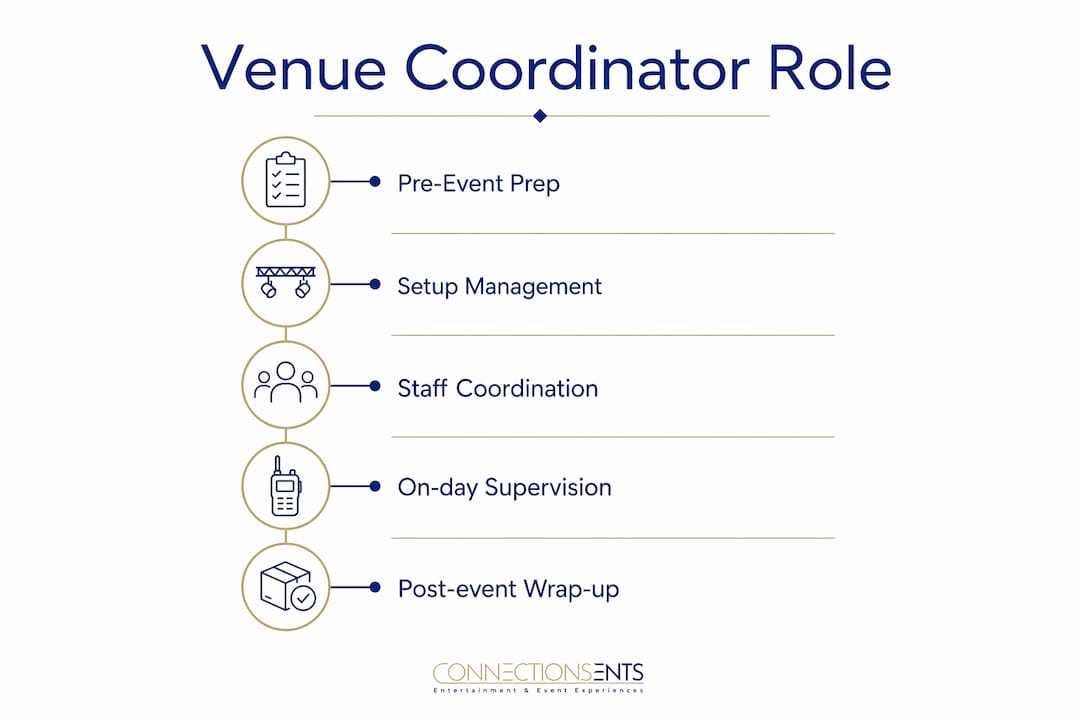
Venue coordinators arrive hours before guests do. They oversee the setup of tables, chairs, staging, and AV equipment to match the agreed room layout. They coordinate in-house catering and bar staff, confirm service timings, and check that all areas of the venue are ready and safe. According to Graystone Columbus, venue coordinators remain on site until breakdown after the event ends, ensuring venue standards are upheld throughout.

Their venue coordinator responsibilities also include enforcing noise restrictions, fire safety rules, and any licensing conditions attached to the property. A licensed venue for events in the UK carries specific legal obligations, and the coordinator is the person who makes sure those obligations are met in real time. If a supplier arrives late or a room configuration needs adjusting, the venue coordinator resolves it on the spot.
Here is a clear breakdown of the core functions of venue coordinators on an event day:
- Setup and teardown supervision: Confirm that all furniture, décor, and technical equipment are positioned correctly before guests arrive.
- In-house staff management: Brief and direct catering teams, bar staff, and cleaning crews throughout the event.
- Vendor access control: Grant entry to external suppliers, share venue timelines, and clarify property rules. Note that venue-related vendor communications are their remit, not full vendor management.
- Safety and compliance monitoring: Enforce noise curfews, capacity limits, and fire safety protocols at all times.
- Timeline transitions: Manage the movement between ceremony, drinks reception, and dinner within the venue’s physical spaces.
- Facility condition: Protect the property from damage and report any issues to venue management.
Pro Tip: Ask your venue coordinator for a written copy of the venue’s house rules at least four weeks before your event. Sharing this with your entertainment suppliers early prevents avoidable conflicts on the day.
Smooth event operations depend on proactive preparation that begins well before the event day itself. The coordinator’s pre-event work, including site visits with suppliers and confirming the wedding reception layout, is just as important as their presence on the day.
How do venue coordinators differ from event planners?
The most common source of confusion in event venue management is the assumption that a venue coordinator and an event planner do the same job. They do not. A venue coordinator is employed by the venue and works to protect the venue’s property, reputation, and interests. An event planner is hired by you, the client, and works to protect your interests.
Think of it this way. The venue coordinator owns the “hardware”: the building, the staff, the catering, and the compliance. The event planner manages the “software”: your guest list, your timeline, your entertainment suppliers, and the emotional flow of the day. Amy Abbott Events describes this as a partnership between hardware and software that, when working well, covers every base.
Comparison: venue coordinator vs event planner
| Area | Venue coordinator | Event planner |
|---|---|---|
| Employed by | The venue | The client |
| Primary focus | Venue operations and facility | Overall event flow and guest experience |
| Manages | In-house staff, catering, compliance | External vendors, timeline, entertainment |
| Vendor contact | Venue access and rules only | Full vendor coordination |
| Emotional investment | Venue’s reputation | Client’s vision and satisfaction |
| Assigned | Typically one month before the event | From the start of planning |
Common misconceptions about venue coordinator scope include:
- They will manage your DJ or band. They will not. Entertainment suppliers report to your event planner or directly to you.
- They will keep your event running to schedule. They manage the venue’s internal transitions, not your full programme.
- The person who sold you the venue space is your coordinator. The salesperson and the day-of coordinator are often different people, assigned only about one month before the event.
- They will handle guest queries. Guest experience is the event planner’s territory.
Understanding the benefits of a wedding event coordinator alongside the venue coordinator’s role gives you a much clearer picture of what professional support you actually need.
Why does collaboration between venue coordinators and event planners matter?
Effective collaboration between venue coordinators and event planners is the single biggest factor in whether an event runs without incident. Viewing these roles as a team rather than separate functions maximises efficiency and creates a better experience for everyone in the room.
When both professionals communicate clearly and respect each other’s boundaries, the results are tangible. Here is how a well-coordinated partnership works in practice:
- Pre-event briefing: The event planner shares a full supplier schedule with the venue coordinator at least two weeks before the event. The coordinator confirms access times, loading bay availability, and any restrictions.
- Role assignment on the day: The venue coordinator takes all queries about the building, catering, and staff. The event planner handles guest experience, entertainment cues, and timeline management.
- Shared communication channel: Both professionals use a single point of contact, often a shared document or group message thread, to flag issues without duplicating effort.
- Contingency planning: If a supplier is delayed, the event planner adjusts the programme while the venue coordinator manages the physical space to accommodate the change.
- Breakdown coordination: The event planner oversees guest departure and supplier collection while the venue coordinator manages the handover of the space back to the venue.
Pro Tip: At your final planning meeting, ask both your event planner and venue coordinator to confirm, in writing, exactly which tasks each of them owns. A one-page responsibility matrix prevents gaps and avoids duplication on the day.
Effective communication and role clarity before the event day reduces surprises and improves readiness for both professionals. Clients who engage both a venue coordinator and an event planner consistently report a calmer, more organised experience. You can read more about why venues partner entertainment companies to understand how this division of labour plays out in entertainment-focused settings.
What practical steps help you work effectively with venue coordinators?
Getting the most from your venue coordinator requires preparation on your part. Providing clear, venue-related needs early helps them function at their best. Avoid expecting them to handle tasks outside facility management, as this creates miscommunication and leaves gaps in your planning.
- Submit a full vendor list with arrival times. Include your DJ, photographer, florist, and any other external suppliers. The venue coordinator needs this to manage access and avoid bottlenecks at the entrance.
- Confirm setup and breakdown windows in advance. Agree on exactly when suppliers can enter and when the venue must be cleared. This is especially important for entertainment equipment that requires significant installation time.
- Use their facility knowledge. Ask your venue coordinator about power supply locations, load-bearing limits for staging, and any areas of the venue that are off-limits. This knowledge is invaluable for AV and lighting suppliers.
- Clarify your communication channel. Decide whether you will contact the coordinator directly or route all queries through your event planner. Consistency prevents confusion.
- Understand their limits. The venue coordinator will not chase your florist if they are running late or rewrite your seating plan. Keep those tasks with your event planner or yourself.
- Request a pre-event walkthrough. A site visit with your key suppliers and the venue coordinator, ideally four to six weeks before the event, resolves most logistical questions before they become day-of problems.
A private party venue brief is a practical tool for consolidating all of this information into one document that both you and the coordinator can reference throughout the planning process.
How do venue coordinators reduce stress on the event day?
A venue coordinator’s greatest contribution is often invisible. When they are doing their job well, you simply do not notice the problems they have already solved. Their proactive approach to issue mitigation means that most logistical challenges are resolved before guests are even aware of them.
“The best venue coordinators are the ones you never have to call. They have already handled it.”
This is the standard that professional venue coordination sets. The coordinator monitors the event timeline within the venue’s capacity, ensuring that catering is served on time, rooms are transitioned smoothly, and the building remains safe and compliant throughout. They carry venue-specific knowledge that no external supplier can replicate, from the quirks of the sound system to the exact location of the fuse box.
For you as a host, this translates directly into freedom. When the venue coordinator is managing the facility, you can focus on your guests rather than chasing staff or resolving supplier access issues. For a wedding couple, this means being present during the first dance rather than worrying about whether the caterers have cleared the tables. For a corporate event host, it means networking confidently rather than monitoring the AV setup.
Venue coordinators also protect the physical condition of the space. They monitor for damage, manage waste removal, and ensure that the venue is returned to its original state after the event. This protects your deposit and maintains your relationship with the venue for any future bookings.
Key takeaways
Venue coordinators manage the physical operations of the event space, while event planners manage the overall guest experience, and both roles must work together for a successful event.
| Point | Details |
|---|---|
| Venue coordinator’s core focus | They manage facility operations, in-house staff, and compliance, not the full event programme. |
| Role distinction from planners | Coordinators represent the venue; event planners represent the client and manage external suppliers. |
| Collaboration is non-negotiable | Shared communication and clearly defined responsibilities prevent gaps and improve event outcomes. |
| Early preparation pays off | Submitting vendor lists and confirming setup windows weeks in advance helps coordinators perform at their best. |
| Day-of benefit for hosts | A competent venue coordinator frees you to focus on guests rather than logistics. |
Darren’s view: what most people get wrong about venue coordinators
Most event hosts I have observed make the same mistake. They assume the venue coordinator is their primary point of support for everything that happens on the day. When something goes wrong with the entertainment or a supplier is late, they look to the venue coordinator to fix it. That expectation almost always leads to frustration.
The venue coordinator’s job is genuinely skilled and genuinely demanding. Managing in-house catering teams, enforcing licensing conditions, and keeping a complex physical space running safely during a live event is no small feat. But it is a specific job with specific limits. The moment you ask a venue coordinator to chase your band’s tour manager or redesign your seating plan, you are pulling them away from the tasks that actually protect your event.
What I have found works best is treating the venue coordinator as a specialist subcontractor rather than a general event manager. Give them precise, facility-focused tasks. Let them own those tasks completely. Then make sure your event planner or entertainment coordinator handles everything else. The role of event planners in this context is to act as the bridge between your vision and every supplier involved, including the venue itself.
One trend worth watching is the growing expectation that venue coordinators will absorb more of the event management workload as couples and corporate clients try to reduce costs by not hiring a separate planner. This rarely ends well. The venue coordinator’s loyalty is to the venue, not to your guest experience. That is not a criticism. It is simply the reality of how the role is structured. Knowing this going in means you can plan accordingly and get the best from both professionals.
— Darren
Planning your event entertainment alongside venue coordination
When your venue coordinator has the facility under control, the next priority is the entertainment experience your guests will remember. Connections Entertainment works with couples and corporate clients across Norfolk and East Anglia to provide event entertainment that integrates smoothly with venue operations. From live music and tribute acts to photo booths, champagne towers, and full AV hire, every service is designed to complement the work your venue coordinator is already doing. If you are planning a wedding or corporate function and want entertainment that fits your venue’s layout and licensing conditions, get in touch with Connections Entertainment to discuss your options.
FAQ
What does a venue coordinator do on the day?
A venue coordinator oversees the setup, manages in-house catering and bar staff, enforces venue rules, and ensures the space is safe and compliant throughout the event. They remain on site until the venue is cleared after the event ends.
Is a venue coordinator the same as an event planner?
No. A venue coordinator is employed by the venue and focuses on facility operations. An event planner is hired by the client and manages the overall event, including external suppliers and guest experience.
When is a venue coordinator assigned to my event?
Venue coordinators are typically assigned about one month before the event, which means the person who sold you the venue space may not be your day-of coordinator. Confirm who your coordinator is well in advance.
Do I still need an event planner if my venue has a coordinator?
Yes. The venue coordinator manages the building and its staff. An event planner manages your suppliers, timeline, and guest experience. These are complementary roles, not interchangeable ones.
How can I help my venue coordinator prepare?
Submit a full vendor list with arrival times, confirm setup and breakdown windows early, and request a pre-event walkthrough. Clear, venue-specific information given early allows the coordinator to prepare thoroughly and avoid day-of surprises.