
The role of outdoor event spaces: a 2026 UK guide
Discover the role of outdoor event spaces in shaping unforgettable gatherings across the UK. Learn to choose the perfect venue for 2026!
Outdoor event spaces are the backbone of the UK’s most memorable gatherings, from village fetes and music festivals to corporate away days and summer weddings. Their role goes far beyond simply providing a patch of ground. They shape atmosphere, determine what’s logistically possible, and directly influence how guests feel from the moment they arrive. For UK event planners in 2026, understanding how to choose and use outdoor venues well is one of the most practical skills you can develop.
Here is what outdoor event spaces genuinely offer:
- Creative freedom: You build the environment from scratch, which means the theme, layout, and flow are entirely yours to define.
- Capacity flexibility: Open grounds scale up or down far more readily than fixed indoor rooms.
- Natural atmosphere: Daylight, fresh air, and green surroundings create a mood no interior can fully replicate.
- Community connection: Outdoor events animate public spaces, support local economies, and foster a sense of shared identity.
- Economic contribution: The UK outdoor events sector is valued at over £25 billion annually, representing the largest segment within the UK’s £61.6 billion events industry.
What are the key benefits of hiring outdoor event venues?
Outdoor venues give you room to breathe, literally and logistically. The absence of fixed walls means you can configure space around your guest list rather than squeezing your guest list around the space. For larger gatherings, this is a practical advantage that indoor venues simply cannot match.
The guest experience benefits are equally tangible. Natural light improves mood, open air reduces the stuffiness that plagues crowded indoor rooms, and the surrounding landscape adds visual interest at no extra cost. Research from 2018 found that 84% of outdoor event attendees reported satisfaction with their experience, and 80% described outdoor events as creative and attractive.
Sector scale: The total economic impact of outdoor events could exceed £50 billion annually when multiplier effects such as visitor spending, staffing, and supply chains are included.
Outdoor venues also support event formats that are simply not viable indoors:
- Large-scale live music with full stage rigs and production
- Agricultural and country shows with livestock and machinery
- Community festivals with multiple activity zones running simultaneously
- Charity runs and sporting events requiring open terrain
The economic case for outdoor events extends well beyond ticket sales. Every pound of organiser income typically triggers a further £1.50–£2.80 in spending by visitors, suppliers, and staff in the surrounding area.
How versatile are outdoor event spaces in the UK?
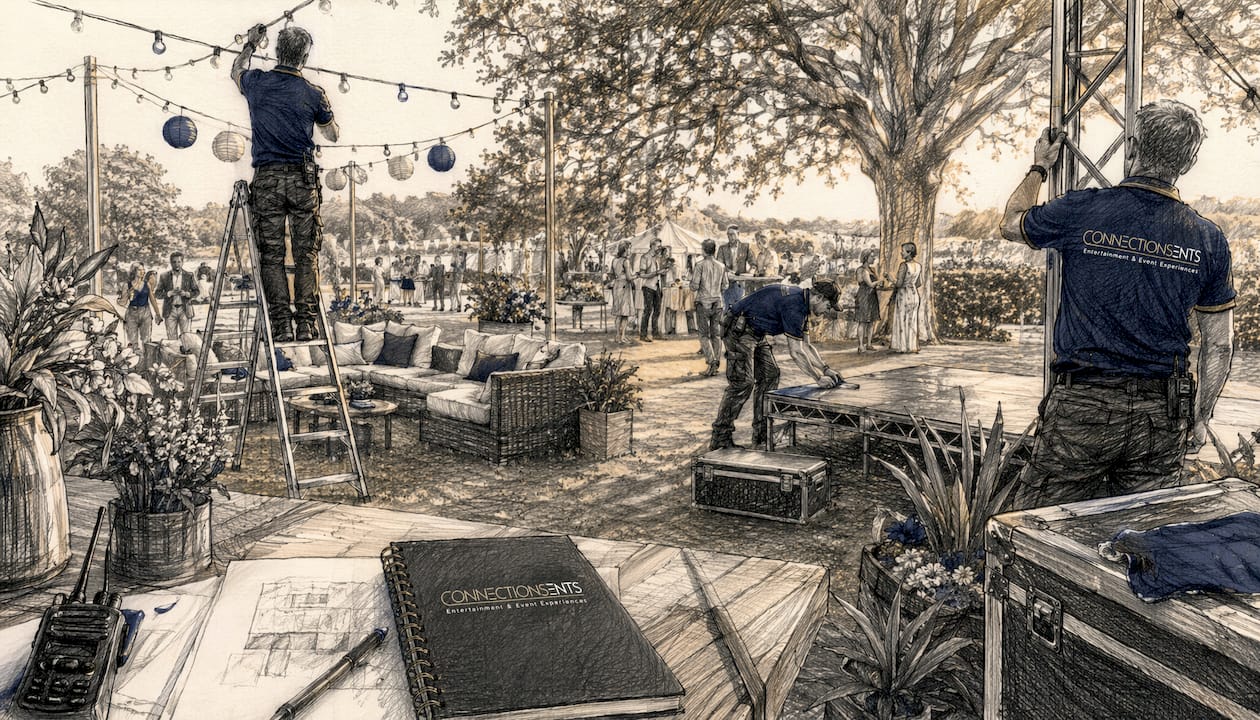
Outdoor venues adapt to an extraordinary range of event types and formats, which is precisely why they attract planners working across every sector. A single field can host a wedding ceremony in the morning, a corporate team-building afternoon, and a community concert in the evening, provided the infrastructure is planned correctly.
Temporary structures are the key to this flexibility. The main options include:
- Frame marquees: Freestanding aluminium frames with PVC covers, no internal poles, giving you full usable floor space and clear sightlines.
- Traditional pole marquees: Atmospheric and visually appealing, though internal poles reduce floor space. Well suited to garden parties and weddings.
- Stretch tents: Flexible fabric structures that work well over bars, dining areas, and informal zones, and can be configured in multiple shapes.
Layouts can shift between events with relatively little effort, and guest numbers can scale up or down by adjusting the footprint. This adaptability makes outdoor spaces particularly useful for events where attendance is uncertain or where the programme changes throughout the day.
Pro Tip: Map your guest flow before you finalise the layout. Identify where people will arrive, queue, eat, and gather, then position structures and signage to guide movement naturally. Bottlenecks at entrances and exits are the most common cause of poor guest experience at outdoor events.
How do outdoor spaces enhance atmosphere and creativity?
The atmosphere at an outdoor event is shaped by factors you cannot buy or install: natural light shifting through the day, the sound of wind in trees, the visual depth of an open horizon. These qualities create a sensory backdrop that indoor venues spend considerable money trying to approximate.
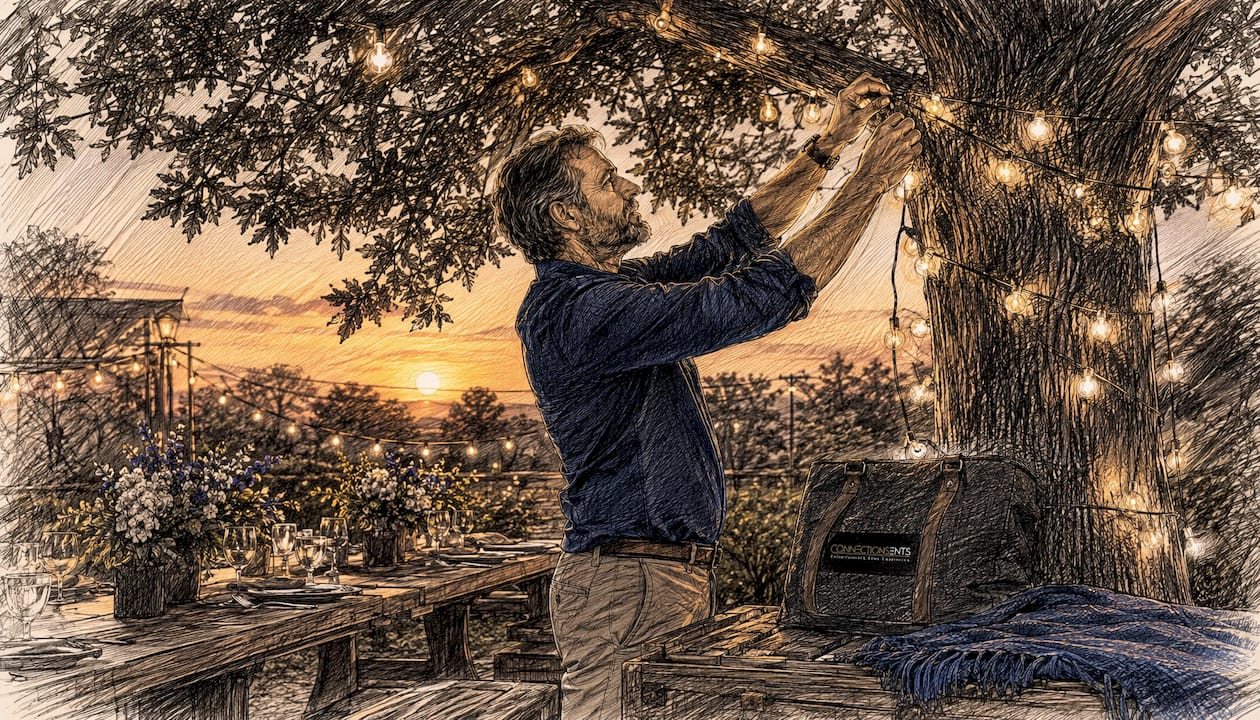
Creatively, starting with a blank canvas is both a challenge and an opportunity. You are not working around someone else’s décor or fixed furniture. Thematic installations, bespoke lighting rigs, and interactive zones can be positioned exactly where they will have the most impact.
Key creative advantages of outdoor settings include:
- Natural backdrops that reduce the need for expensive set dressing
- Flexible zoning for separate activity areas, quiet spaces, and catering
- Ambient sound management using natural topography and tree lines as buffers
- Lighting design that layers artificial light against the natural sky at dusk
- Interactive installations that use the landscape as part of the experience
Norfolk Showground, one of the UK’s most established outdoor event venues, demonstrates this well. Its open grounds have hosted everything from county agricultural shows to large-scale corporate exhibitions, with the landscape itself contributing to the event’s character in each case.
Weather and contingency planning for outdoor events
Weather is the single biggest operational risk for any outdoor event in the UK. You cannot control it, but you can plan for it in enough detail that it never catches you off guard.
Experienced planners build contingency into every element of the event from the outset, rather than treating it as an afterthought. The most effective approach is to define precise trigger points in advance: specific wind speeds at which signage comes down, rainfall thresholds that activate mud management plans, and temperature ranges that trigger heating or shade deployment.
Common weather contingencies to plan for:
- Tents and marquees for rain and wind shelter
- Portable heaters for early spring and autumn events
- Shade structures and misting systems for summer heat
- Drainage and ground protection boards for wet ground conditions
- Weighted or anchored signage rated for expected wind speeds
- Waterproof footwear guidance in pre-event communications to guests
Pro Tip: Document your contingency plan as a written operational document, not just a mental checklist. Councils and Safety Advisory Groups expect to see granular, executable plans. A vague “we will respond to weather as needed” statement will not satisfy a licensing authority.
Health and safety considerations extend to power supply. Generators sized in kVA are standard for outdoor events with no mains connection, and correct placement matters: voltage drop in cabling between generators and audio equipment is a common cause of degraded sound quality that planners often overlook until it is too late.
Which event types benefit most from outdoor spaces?
Outdoor venues suit a wider range of occasions than most planners initially consider. The common thread is that each of these event types gains something specific from the open-air setting that an indoor room cannot provide.
- Music festivals and concerts: Scale, production freedom, and the energy of a crowd under open sky. The UK currently hosts 592 active music festivals, and live music tourism drew 23.5 million visitors in 2024.
- Weddings: Natural light for photography, scenic backdrops, and a relaxed atmosphere that formal venues rarely achieve. Outdoor wedding entertainment options have expanded considerably, with live bands, acoustic sets, and photo booths all working well in open-air settings.
- Corporate events: Team-building activities, product launches, and away days benefit from the informal, energising quality of outdoor spaces.
- Community and charity events: Agricultural shows, fairs, and charity runs rely on outdoor terrain and attract around 7 million attendees annually to agricultural shows alone.
- Cultural and heritage events: Outdoor settings add authenticity to historical re-enactments, art installations, and cultural festivals.
- Sporting events: Open terrain is a prerequisite for most competitive and recreational sporting formats.
The importance of open spaces for community engagement is well documented. Events held outdoors consistently score higher on measures of community pride and local identity than equivalent indoor gatherings.
What does industry research tell us about the UK outdoor events sector in 2026?
The scale of the UK outdoor events sector is larger than most people outside the industry realise. The sector contributes over £25 billion to the national economy each year, making it bigger than conferences, exhibitions, and business events combined.
Sector snapshot: In 2018, outdoor events produced £39.5 billion in total spend and supported 589,000 full-time equivalent jobs across the UK economy.
The sector is not without pressure. Production costs have notably increased since 2021, and numerous festivals closed in 2024 due to rising insurance, security, and regulatory costs. These closures represent a real challenge for smaller and mid-sized organisers operating on tight margins.
| Metric | Figure |
|---|---|
| Annual sector value | Over £25 billion |
| UK events industry total | £61.6 billion |
| Potential total impact (with multipliers) | Over £50 billion |
| Total spend in 2018 | £39.5 billion |
| Full-time equivalent jobs (2018) | 589,000 |
| The UK hosts a very large number of active music festivals. | |
| In 2024, a significant number of festivals closed due to operational challenges. | |
| Agricultural shows attract millions of attendees annually. |
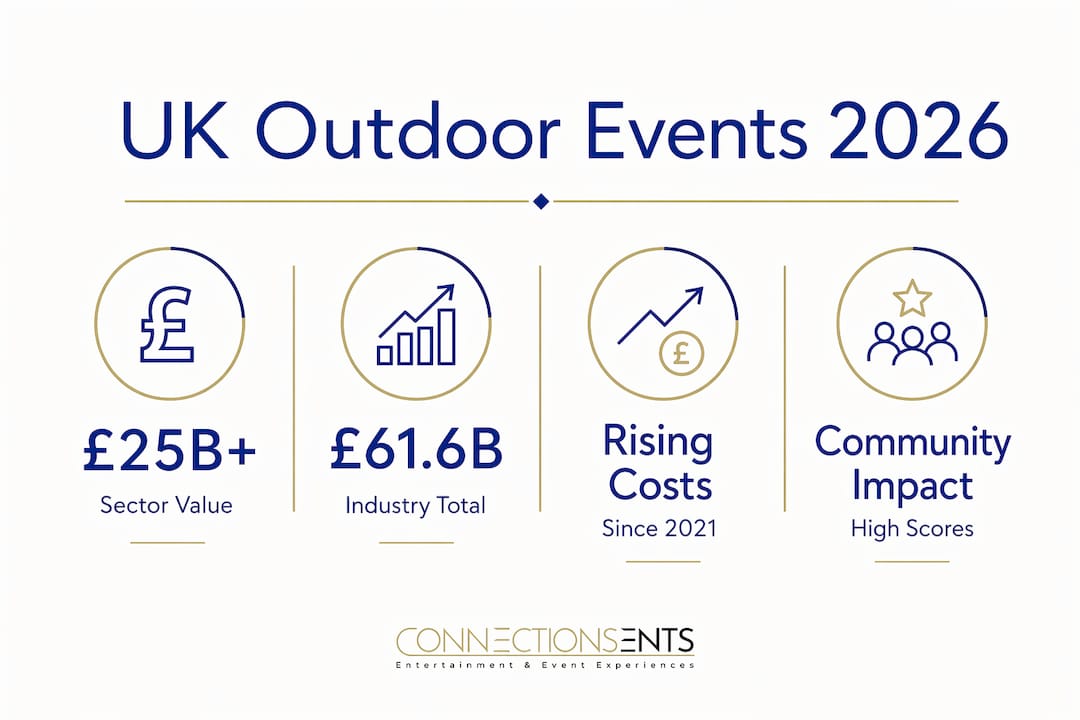
The social value of outdoor events runs alongside the economic data. Research consistently shows that outdoor events contribute to community cohesion, support mental health and wellbeing, and play a placemaking role by bringing life to underused public spaces. As festival programming evolves in response to these pressures, planners who understand both the economic and social dimensions of their events are better placed to make the case to funders and local authorities.
What legal and permit requirements apply to outdoor events in the UK?
Outdoor events in the UK operate within a framework of licensing, planning, and safety legislation that you need to understand before you commit to a venue or a date.
The Licensing Act 2003 governs most public entertainment, and events with live or recorded music, alcohol sales, or late-night refreshment require a Temporary Event Notice (TEN) or a full premises licence, depending on scale. TENs are capped at 499 attendees and must be submitted to the local council at least ten working days before the event.
For larger events, you will typically engage with a Safety Advisory Group (SAG). SAGs in UK councils expect detailed, executable operational plans covering crowd management, medical provision, security, and emergency procedures. A general statement of intent will not satisfy them. Licensing delays are most commonly caused by insufficient documentation at the planning stage.
Additional requirements to address:
- Planning permission if you are erecting temporary structures above a certain size or holding events on land not designated for public use
- Public liability insurance covering all attendees and third-party contractors
- Food hygiene registration for any catering operation, including temporary stalls
- Noise management plans submitted to the local authority, particularly for amplified music
- Road closure orders if the event affects public highways
- Accessibility compliance under the Equality Act 2010, covering pathways, facilities, and communications
The GOV.UK guidance on voluntary and community events is a practical starting point for smaller organisers, covering health and safety, food hygiene, and public liability in plain language.
How do you manage security and safety at outdoor events?
Security and safety at outdoor events require a different approach from indoor venues because the environment itself is variable. Perimeters are harder to define, access points multiply, and crowd behaviour in open spaces is less predictable than in corridors and rooms.
Start with a thorough site risk assessment before any other planning. Walk the ground in the conditions closest to your event date and identify hazards: uneven terrain, drainage issues, proximity to roads, and any structures that could become dangerous in high winds.
Core safety measures for outdoor events:
- Crowd management plan covering entry and exit flow, maximum occupancy per zone, and emergency evacuation routes
- Trained security personnel at all access points and throughout the site, with clear briefing on escalation procedures
- Medical provision scaled to expected attendance, including a dedicated first aid point with clear signage
- Fire safety covering storage of flammables, clear fire exits from all structures, and a no-obstruction policy on all escape routes
- Communication systems between security, medical, and management teams, including a designated event control point
- Lighting on all pathways, particularly for events running into the evening
Venue capacity planning is a safety matter, not just a commercial one. Understanding venue capacity for entertainment events helps you set realistic limits and avoid the overcrowding that leads to both safety incidents and licensing problems. Councils and SAGs will scrutinise your capacity figures closely, so base them on measured site surveys rather than estimates.
How Connections Entertainment supports your outdoor event
Planning an outdoor event in Norfolk or East Anglia and need entertainment that actually works in an open-air setting? Connections Entertainment specialises in exactly this. Rather than leaving you to piece together separate suppliers, the team provides full event entertainment coordination alongside a wide range of acts and equipment suited to outdoor conditions.
The range covers DJs with weatherproof setups, live bands, tribute acts, acoustic performers, photo booths, and full AV hire, all sourced through a single point of contact. For outdoor weddings, corporate days, and community events across Norfolk and East Anglia, that coordination removes a significant layer of logistical complexity. Browse the full entertainer catalogue to see what fits your event format and scale.
FAQ
Why are venues important for an event?
The venue determines atmosphere, capacity, logistics, and guest experience before a single decision about entertainment or catering is made. A well-chosen venue supports every other element of the event; a poor one creates problems that no amount of planning can fully resolve.
What are the main advantages of outdoor catering and events?
Outdoor events offer natural atmosphere, flexible capacity, and creative freedom that fixed indoor venues cannot match. Research shows that 84% of outdoor event attendees report satisfaction with their experience, and the sector is valued at over £25 billion annually.
How do you organise an outdoor event in the UK?
Start planning at least twelve months ahead for larger events. Secure the site, submit any required Temporary Event Notices or licence applications, commission a site risk assessment, and build a detailed contingency plan covering weather, power, crowd management, and medical provision.
What categories of events work well outdoors?
Music festivals, weddings, agricultural and country shows, corporate away days, community fairs, charity runs, and cultural festivals all benefit from outdoor settings. Each gains something specific from the open-air environment, whether that is scale, natural atmosphere, or the use of terrain that indoor venues cannot provide.
Key takeaways
Outdoor event spaces play an indispensable role in UK event planning, combining economic scale, creative flexibility, and social value that no indoor venue can replicate.
| Point | Details |
|---|---|
| Economic scale | The UK outdoor events sector is valued at over £25 billion annually, the largest segment of the £61.6 billion events industry. |
| Multiplier effect | Every pound of organiser income typically generates £1.50–£2.80 in wider visitor and supplier spending. |
| Weather planning | Define precise trigger points in writing before the event; SAGs and councils expect granular, executable contingency plans. |
| Legal requirements | Temporary Event Notices, public liability insurance, noise management plans, and SAG documentation are standard requirements for most outdoor events. |
| Connections Entertainment | Provides full outdoor event entertainment coordination across Norfolk and East Anglia, covering DJs, live acts, AV hire, and photo booths through a single supplier. |