
Hiring a wedding band guide: how to get it right
Make your reception unforgettable! This hiring a wedding band guide offers practical steps to choose the perfect live band for your big day.
TL;DR:
- Choosing the right wedding band is crucial as it greatly influences reception energy and guest experience.
- Couples should book at least 12 to 18 months in advance, considering venue size and technical requirements.
A wedding band is the single biggest driver of reception energy, and getting the choice wrong is one of the most common and costly mistakes couples make. This hiring a wedding band guide gives you a clear, practical process for selecting live music that fits your venue, your guest list, and your vision. You will learn how to match band size to your event, what to look for when evaluating acts, how to handle logistics, and when to book. Follow these steps and your dance floor will look after itself.
How to use this hiring a wedding band guide effectively
The industry term for what most couples are searching for is “live entertainment hire,” and a wedding band sits at the heart of that category. Live bands shape the emotional memory of your event. Guests remember how the night felt far more than the flowers or the favours. That single fact should reframe every decision you make about music. Getting the right act is not a luxury. It is the foundation of a great reception.
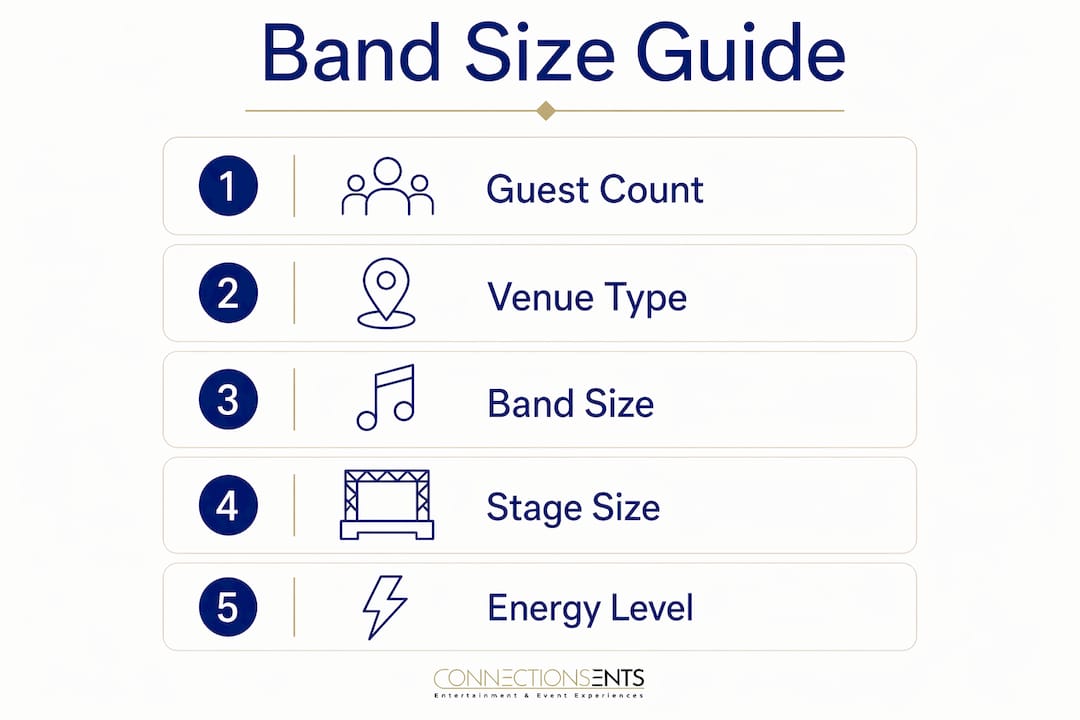
The process of selecting a band covers five key areas: size, style, professionalism, logistics, and budget. Each one affects the others. A band that sounds perfect in a demo but cannot fit your venue stage is the wrong band. A group with a brilliant repertoire but poor communication will cause stress on the day. This guide addresses all five areas in sequence so you can make a confident, informed decision.
What band size suits your venue and guest list?
Band configuration must scale with your event. A 2–3 piece act suits weddings with fewer than 80 guests, a 5–7 piece works well for 80–150 guests, and 8 or more musicians are appropriate for receptions of 150 or more. These are not arbitrary numbers. Smaller bands in large rooms lose energy. Larger bands in intimate spaces overwhelm the room and the budget.

Venue size and dance floor ambition are equally important factors. A barn with a 200 capacity but a small stage cannot physically accommodate a 10-piece band with a full horn section. A hotel ballroom with a sprung dance floor and 180 guests, on the other hand, rewards a larger act. Think about what you want the room to feel like at 10pm. That mental image should guide your band size decision more than any other single factor.
| Guest count | Venue type | Recommended band size |
|---|---|---|
| Under 80 | Intimate venue, barn, garden | 2–3 piece |
| 80–150 | Mid-size hotel, manor house | 5–7 piece |
| 150+ | Large ballroom, marquee | 8+ piece |
| Any size | Ceremony or drinks reception only | Solo or duo acoustic act |
Pro Tip: Ask your venue coordinator for the maximum stage dimensions and power supply capacity before you approach any band. This single step eliminates a third of the acts that would never have worked in the space.
You can read more about wedding band basics to understand how different configurations affect sound coverage and atmosphere before you start shortlisting acts.
What should you look for when evaluating wedding bands?
Musical style is the starting point, but it is not the whole picture. Prioritising dance floor energy over appearance avoids the most common mismatch between band and guests. A band that looks polished but plays to a narrow genre will leave half your guests sitting down. Think about your guest demographic honestly. A crowd of mixed ages needs a band with a broad repertoire spanning decades, not a group that specialises in one era.
Repertoire flexibility is a strong indicator of a professional act. Ask whether the band can accommodate special requests, cultural music requirements, or a specific first dance song they do not currently perform. Many professional acts will learn one or two songs on request, given enough notice. That willingness signals both skill and a genuine commitment to your event.
Professionalism shows up long before the wedding day. Logistical clarity and communication during the booking process are reliable predictors of how smoothly the day itself will run. A band that takes a week to reply to an enquiry, sends vague answers about setup times, or cannot confirm their equipment list is showing you exactly how they will behave on the day.
Questions to ask every band before booking
- What is your full set list and can we request additions?
- How long are your sets and how many breaks do you take?
- Do you provide your own PA system and lighting rig?
- What is your contingency plan if a band member is ill?
- Can you provide references from recent wedding clients?
- What is included in your quoted fee?
Red flags to watch for
- Slow or vague responses to initial enquiries
- No written contract or unclear cancellation terms
- Unwillingness to share a recent live performance video
- Inability to confirm setup and soundcheck times
- No public liability insurance documentation
Pro Tip: Always ask for a live video from a real wedding, not just a studio recording. Studio demos are polished by design. A live clip from a similar venue tells you how the band actually sounds and performs under real conditions.
How do you coordinate logistics and technical details with your band?
Logistics are where many wedding music plans fall apart. Sound system and stage requirements must be confirmed with both the band and the venue well before the wedding day. Some bands bring a full PA and lighting rig. Others expect the venue to provide it. Assuming either way without written confirmation creates expensive problems on the day.
Arrival and setup time is a detail that couples frequently underestimate. A 7-piece band with a full production setup typically needs 2–3 hours to set up and soundcheck. If your venue has a strict room turnaround between the wedding breakfast and the evening reception, that window may not exist. Confirm the timeline with your venue coordinator and share it with the band in writing.
Break schedules also need planning. Most bands play two or three sets of 45–60 minutes with breaks in between. During those breaks, you need a plan to keep the energy up. A DJ playlist, a curated Spotify set through the venue’s system, or a second act can fill the gaps. Interviewing bands with specific questions about break schedules and coverage avoids awkward silences on the night.
Logistics and technical checklist
- Confirm stage dimensions and power supply with the venue
- Get written confirmation of what AV equipment the band provides
- Agree arrival, setup, and soundcheck times in writing
- Clarify the venue’s noise limiter or sound restriction policy
- Plan break coverage with a DJ set or background music
- Share a full running order with the band at least two weeks before the wedding
- Confirm public liability insurance is in place for the band
For couples who also want to consider live performers beyond a traditional band, options such as string quartets for the ceremony or acoustic duos for the drinks reception can complement the main act and fill different parts of the day.
When and how should you book a wedding band?
Booking timeline is one of the most underestimated parts of wedding music planning. Couples typically book wedding bands 12–18 months in advance to secure availability and access the best acts. The most in-demand bands at any given price point are often fully booked a year or more ahead, particularly for peak summer Saturdays in june, july, and august.
Budget varies significantly with band size and what is included in the fee. Full bands with production represent a higher investment than small acoustic acts. When comparing quotes, look beyond the headline figure. Ask what is included: PA system, lighting, travel, accommodation for the band if required, and any overtime rates. Two quotes at the same price can represent very different levels of service.
Contract essentials protect both you and the band. A written agreement should confirm the date, venue, performance times, set lengths, fee, deposit amount, payment schedule, and cancellation terms for both parties. Never pay a full fee upfront. A deposit of 25–50% is standard practice, with the balance due closer to the event date. If a band asks for full payment at booking, treat that as a warning sign.
Pro Tip: Book your band before you finalise your venue. Knowing your preferred act’s technical requirements, including stage size and power needs, helps you choose a venue that can actually accommodate them. Reversing that order is one of the most common and avoidable planning mistakes.
Key takeaways
Selecting the right wedding band requires matching band size to your guest count and venue, evaluating acts on energy and professionalism, and booking at least 12 months in advance to secure the best options.
| Point | Details |
|---|---|
| Match band size to guest count | Use a 2–3 piece for under 80 guests, 5–7 piece for 80–150, and 8+ for larger receptions. |
| Prioritise energy over appearance | A band that fills the dance floor matters more than one that looks impressive in photos. |
| Verify logistics in writing | Confirm setup times, AV equipment, and break schedules with both band and venue before the day. |
| Book 12–18 months ahead | The best acts at every price point fill their calendars early, especially for peak summer dates. |
| Read the contract carefully | Confirm what is included in the fee and never pay the full amount upfront at the time of booking. |
What I have learned from watching couples get this wrong
After years of working in the events and entertainment industry, the pattern I see most often is couples who fall in love with a band’s demo and skip the due diligence. They book on the strength of a polished studio recording, never ask about logistics, and then discover on the wedding morning that the band needs four hours to set up in a venue that only has two. That is a fixable problem if you catch it in advance. On the day itself, it is a crisis.
The second most common mistake is prioritising genre over energy. I have seen technically brilliant jazz quartets play to an empty dance floor because nobody asked whether the guest list actually liked jazz. The best wedding bands are not necessarily the most musically sophisticated ones. They are the acts that read a room, adapt their set on the fly, and keep people moving. That skill does not show up in a demo. It shows up in a live clip from a real wedding, which is exactly why I always recommend asking for one.
My honest advice is to trust your instincts after you have done the work. If a band communicates clearly, provides a solid contract, shares live footage, and answers your questions without hesitation, that is a good sign. If anything feels vague or evasive, keep looking. There are excellent acts available at every price point. You do not need to settle.
The venue constraint point is the one I feel most strongly about. Couples spend months choosing a venue and then try to retrofit a band into it. Knowing your preferred band’s technical requirements before you sign a venue contract gives you real negotiating power and avoids a situation where the space and the act are fundamentally incompatible.
— Darren
How Connections Entertainment can help you find your wedding band
Connections Entertainment works with a curated network of professional wedding bands across Norfolk, East Anglia, and beyond, covering everything from intimate acoustic duos to full production acts for large receptions. The team offers transparent pricing, clear booking support, and expert guidance on matching the right act to your venue and guest list. Browse the full range of available entertainers to see acts suited to your wedding style and budget. For a broader view of how live music fits into your overall event plan, the event entertainment overview covers the full range of options Connections Entertainment can bring to your day. Get in touch to simplify the booking process and make sure your reception sounds exactly as good as it looks.
FAQ
How far in advance should you book a wedding band?
Book 12–18 months before your wedding date. The most sought-after acts at every price point fill their calendars quickly, particularly for peak summer Saturdays.
What size band do you need for 100 guests?
A 5–7 piece band is the standard recommendation for a guest list of 80–150 people. This size delivers strong sound coverage and stage presence without overwhelming a mid-size venue.
What should a wedding band contract include?
A contract should confirm the date, venue, performance times, set lengths, fee, deposit amount, payment schedule, and cancellation terms for both parties. Never proceed without a signed written agreement.
How do you know if a wedding band is professional?
Clear communication and logistical clarity during the enquiry stage are the strongest indicators. Ask for a live performance video, references from recent weddings, and written confirmation of their equipment and insurance.
Can a wedding band learn a specific song for your first dance?
Most professional acts will learn one or two songs on request given sufficient notice, typically at least six to eight weeks before the event. Confirm this in writing and include it in the contract.